How to Exfoliate Your Face Effectively
- Exfoliating your face can improve skin texture. But doing it wrong can damage your skin barrier.
- Many people exfoliate too often or use products that are too harsh. This leads to irritation, redness, and worsening texture.
- This guide explains how to exfoliate safely based on your skin type. You will learn which methods work, how often to use them, and when to stop.
Quick Answer: How to Exfoliate Your Face Effectively
Safe exfoliation depends on using the proper method for your skin type and starting slowly.
Follow these basic steps:
- Choose a product that suits your skin type
- Start with once or twice per week
- Avoid using multiple exfoliants on the same night
- Apply a barrier-supporting moisturiser after
- Wear SPF 50+ sunscreen daily
If you are unsure which exfoliation method suits your skin, a professional skin consultation is the safest first step. Skin type, barrier health, and sensitivity all affect what is appropriate. Treatment or product recommendations should only be made after your skin is assessed correctly.
What “Exfoliating” Means
Exfoliating removes dead skin cells from the surface of your face. Your skin naturally sheds these cells, but sometimes they build up.
This build-up can make skin look dull or feel rough. It can also clog pores. Exfoliation supports the natural skin cell turnover process. When done correctly, it may help improve texture over time.
Note: Tone refers to skin colour. Texture refers to how the surface feels.
Signs You Might Need Exfoliation
You may benefit from exfoliation if you notice:
- Rough or bumpy patches on your skin
- Dull appearance even after cleansing
- Congested pores or blackheads
- Makeup that sits unevenly or looks patchy
- Flaky areas around your nose or chin
- Skincare products that seem to sit on top of the skin
These signs suggest dead skin cell build-up. But not everyone needs regular exfoliation.
Some people naturally shed skin cells efficiently. Others have sensitive skin that reacts poorly to exfoliation.
What Causes Rough or Bumpy Skin Texture
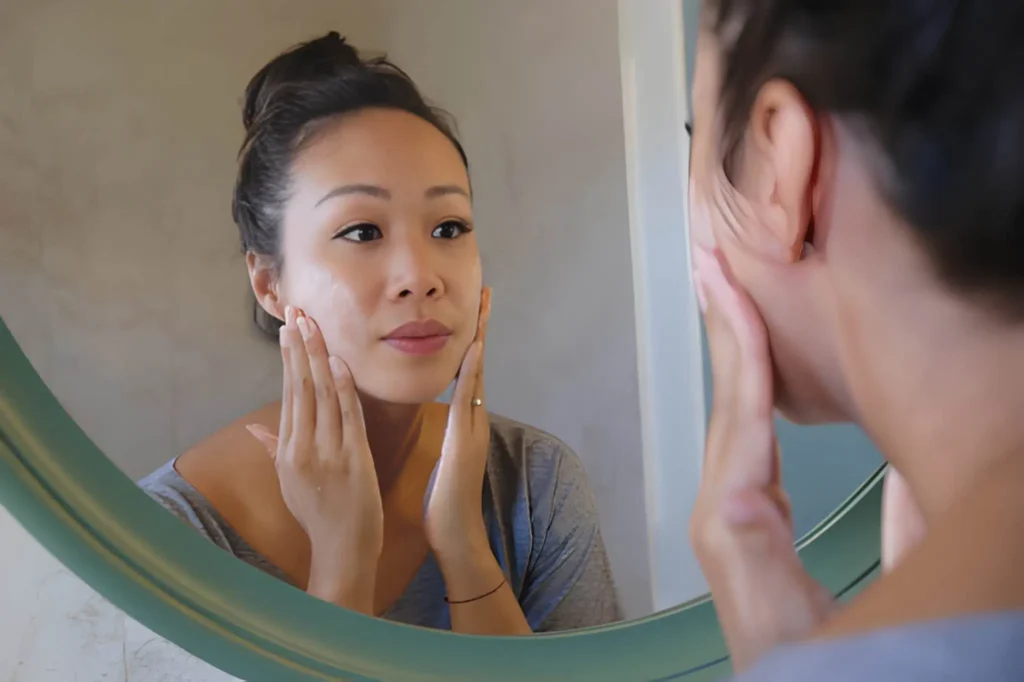
Several factors contribute to uneven texture:
- Dead skin build-up happens when skin cell turnover slows. This can occur with age or from dehydration.
- Oil and congestion mix with dead cells and block pores. This is common in oily skin and acne-prone skin.
- Dehydration and barrier damage make skin flaky. The surface becomes uneven and rough.
- Sun exposure and environmental stress thicken the outer layer of skin. This is particularly relevant in Australia, where UV levels are high.
Understanding what causes your texture helps you choose the right approach.
Types of Exfoliation
There are three main types of exfoliation. Each works differently and suits different skin types.
Physical Exfoliation
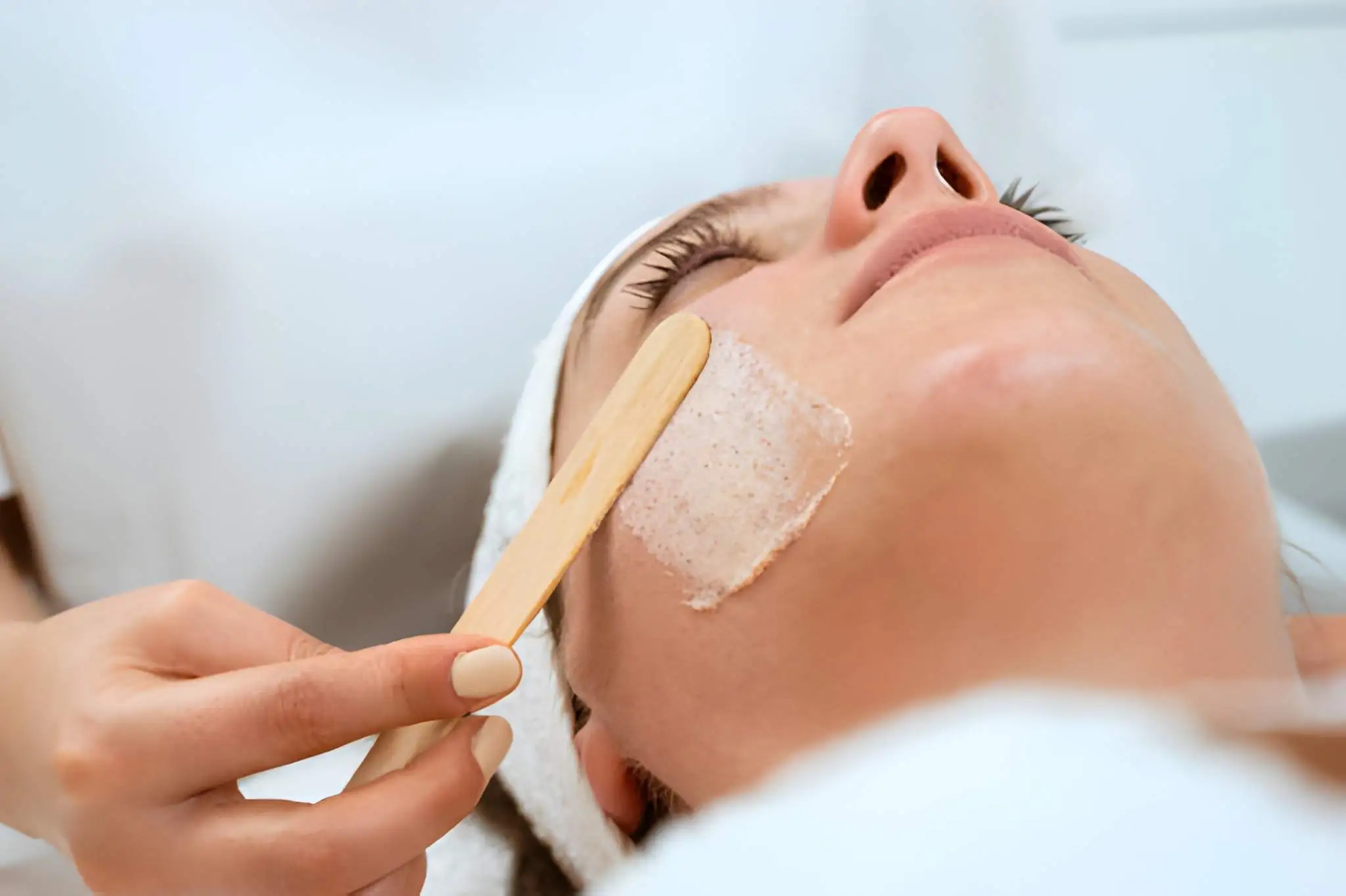
Physical exfoliation uses granular particles or tools to remove dead skin manually.
This includes facial scrubs, brushes, and textured cloths.
When it might help:
- Very mild surface build-up
- Thick, resilient skin
- Occasional use only
Risks to know about:
- Can cause micro-tears in the skin
- May damage the skin barrier if used too often
- Often too harsh for sensitive or acne-prone skin
- Easy to overdo
What to avoid:
- Scrubs with sharp or irregular particles
- Aggressive rubbing or pressure
- Using scrubs on inflamed or broken skin
- Daily use
Physical exfoliation is not suitable for everyone. Many people get better results from gentler methods.
Chemical Exfoliation:
Chemical exfoliation uses acids to dissolve the bonds between dead skin cells.
- AHAs (Alpha Hydroxy Acids) work on the skin surface. Common types include glycolic acid and lactic acid. These may suit dry skin or normal skin when used carefully.
- BHAs (Beta Hydroxy Acids) work inside pores. Salicylic acid is the most common. This type often suits oily skin or acne-prone skin.
- PHAs (Polyhydroxy Acids) are gentler versions. They may suit sensitive skin better than other acids.
Chemical exfoliation can be effective when matched to your skin type. But it can also irritate if overused.
Enzyme Exfoliation:
Enzyme exfoliants use fruit enzymes to break down dead skin cells. These are often gentler than acids or scrubs. They may suit sensitive or reactive skin when tolerated.
Enzyme products usually need to sit on the skin for several minutes. Follow product instructions carefully.
Different exfoliation types suit different skin concerns. If you are unsure whether physical, chemical, or enzyme exfoliation is appropriate for your skin, a skin consultation helps clarify this safely before you change your routine.
Also Read : https://skinduced.com.au/how-to-improve-textured-skin/
How to Choose the Right Exfoliant for Your Skin Type
Your skin type determines which exfoliation method may work best.
- Oily or acne-prone skin may tolerate BHA products like salicylic acid. Start with a low concentration. Use once or twice weekly at most initially.
- Dry skin may respond to mild AHAs like lactic acid. Always follow with an intense moisturiser. Watch for tightness or flaking.
- Sensitive skin needs extra caution. PHA or enzyme options may be gentler. Patch test any new product. Start with a very low frequency.
- Combination skin may need different approaches for different areas. You might use BHA on oily zones and AHA or PHA on drier areas.
- Rosacea-prone skin requires particular care. Avoid physical scrubs and strong acids. Frequency must be minimal if exfoliation is used at all.
These are general guidelines only. Individual tolerance varies significantly. What works for one person may irritate another.
How Often Should You Exfoliate?
Frequency matters more than strength for most people.
Start with once per week. Assess how your skin responds over two to three weeks.
If your skin tolerates this well with no irritation, you may increase to twice weekly. Wait at least three days between sessions.
Stop or reduce frequency if you notice:
- Stinging or burning during or after use
- Flaking or peeling that seems excessive
- Redness lasting more than 24 to 48 hours
- Increased sensitivity to other products
- Tightness that does not improve with moisturiser
More exfoliation does not mean better results. Over-exfoliation damages the skin barrier and worsens texture.
Step-by-Step: How to Exfoliate Your Face
Follow these steps to minimise irritation risk.
Before You Exfoliate
- Cleanse your face gently with a mild cleanser
- Check for any broken skin, cuts, or active irritation
- Do not exfoliate areas with inflammation
- Patch test new products on your inner arm first
During Exfoliation
- Apply a thin layer of product to clean skin
- Avoid the delicate skin around your eyes
- Do not apply to broken or irritated areas
- Follow the timing instructions on the product label
- For acids, this may be several minutes before rinsing
After Exfoliation
This step protects your skin barrier.
- Apply a barrier-supporting moisturiser immediately
- Look for ingredients like ceramides, glycerin, or hyaluronic acid
- Avoid using other potent active ingredients right after
- The next morning, apply SPF 50+ sunscreen before going outside
Exfoliation makes skin more vulnerable to sun damage. Daily sunscreen is essential.
What NOT to Do
These mistakes damage skin and worsen texture:
- Exfoliating daily strips the skin barrier. Even gentle products become harsh with daily use.
- Using a scrub and an acid in the same routine is too much for most skin types. Choose one method per session.
- Exfoliating active acne aggressively spreads bacteria and increases inflammation. Gentle approaches work better.
- Combining potent retinoids and acids together without building tolerance first often causes severe irritation.
- Skipping sunscreen after exfoliating exposes vulnerable skin to UV damage. This can darken pigmentation.
- Exfoliating sunburnt skin delays healing and increases the risk of damage.
Ongoing irritation or worsening texture can be a sign that your skin barrier is compromised. In these cases, stopping exfoliation and having your skin professionally assessed can help prevent further damage.
Safe Ingredient Pairing Guide
Some ingredients work well together. Others cause problems when combined.
What Pairs Well
These combinations are usually safe for most people:
- Any exfoliant followed by a moisturiser
- Exfoliation at night with SPF application the next morning
- Niacinamide often works alongside gentle exfoliants
Always introduce one new product at a time. This helps you identify what causes problems if irritation occurs.
What to Avoid on the Same Night (For Most People)
These combinations often irritate:
- Potent retinoids combined with strong acids
- Multiple different exfoliants are used together
- Exfoliating acids combined with peel pads and physical scrubs
Individual tolerance varies. Some people eventually build up to using certain combinations. But this takes time and should be done cautiously.
When to Stop Exfoliating and Get a Skin Check
Stop exfoliating immediately if you experience:
- Burning or stinging that lasts beyond product removal
- Peeling and tightness that keeps getting worse
- Persistent redness that does not fade within 48 hours
- Sudden rash-like reactions or bumps
- Pigmentation that darkens after irritation
These signs suggest barrier damage or a reaction.
A skin assessment helps identify whether barrier damage, dermatitis, rosacea, or acne is driving your texture concerns. Assessment is needed before resuming exfoliation or considering other options.
Do not push through discomfort. Continuing to exfoliate damaged skin makes recovery much more complicated.
Exfoliation in NSW Conditions
High UV exposure in Australia affects how your skin responds to exfoliation.
Exfoliated skin is more vulnerable to sun damage. This is particularly important if you spend time outdoors regularly.If you exfoliate, daily sunscreen becomes even more critical. Reapply throughout the day if you are outside.
The outdoor lifestyle every day in NSW means sun protection cannot be skipped. Even on cloudy days, UV levels can be significant.
Choose a broad-spectrum SPF 50+ sunscreen. Apply it every morning after your moisturiser.
Professional Options If Home Exfoliation Is Not Enough
Home exfoliation works for mild texture concerns. But deeper issues may need professional assessment.
When home exfoliation does not improve skin texture, professional treatments may be considered. A consultation is essential to assess skin condition, rule out sensitivity risks, and determine whether in-clinic options are suitable.
Professional options include:
- Clinical-grade chemical peels, hydrodermabrasion, and skin needling or RF microneedling.
- These procedures carry specific risks (such as temporary redness, swelling, or sensitivity) and limitations, and they are not suitable for everyone.
- A consultation is mandatory to discuss your medical history, potential side effects, and expected outcomes before proceeding with any clinical treatment.
Note*. These procedures carry specific risks (such as temporary redness, swelling, or sensitivity) and limitations, and they are not suitable for everyone. A consultation is mandatory to discuss your medical history, potential side effects, and expected outcomes before proceeding with any clinical treatment.
Suitability depends on your skin type, current condition, and treatment goals. Results vary between individuals. Not all treatments suit all skin types.
Textured Skin Help in Cameron Park and Surrounding Areas
If you live in Cameron Park, Edgeworth, Cardiff, Glendale, or the nearby Lake Macquarie areas, local options exist for professional skin guidance.
At Skinduced Aesthetic Clinic in Cameron Park, all skin treatments are recommended only after a professional consultation. This allows skin type, texture concerns, and tolerance levels to be assessed before any treatment pathway is discussed.
Consider rephrasing to focus on the technology’s registration: “The clinic uses medical technology registered with the Australian Therapeutic Goods Administration (TGA) and follows Australian medical advertising standards. Treatment recommendations depend on individual assessment. No treatment is guaranteed to suit everyone.
A consultation can help clarify whether home skincare adjustments are sufficient or whether professional treatment options may be appropriate for your specific concerns.
FAQ’s:
How to exfoliate your face safely?
Choose a product that suits your skin type and start with once weekly use. Apply to clean skin, follow with moisturiser, and use SPF 50+ daily. Stop if irritation occurs.
Is exfoliating good for acne?
Gentle exfoliation may help reduce pore congestion in acne-prone skin. BHA products like salicylic acid often suit this skin type. However, aggressive exfoliation can worsen inflammation and spread bacteria.
Can I exfoliate if I have sensitive skin?
Possibly, but with extra caution. Choose gentler options like PHAs or enzyme exfoliants. Start very slowly with low frequency. Stop immediately if burning or redness occurs. Some sensitive skin may not tolerate regular exfoliation.
How do I know if I over-exfoliated?
Signs include persistent stinging, excessive flaking, tight, uncomfortable skin, redness that does not fade, and increased sensitivity to products you usually tolerate. If these occur, stop all exfoliation and focus on barrier repair.
Should I exfoliate in the morning or at night?
Night is usually better. This gives skin time to recover before sun exposure. It also makes morning sunscreen application more straightforward without layering multiple active products.
Do I need exfoliation if I use retinol?
Retinoids already increase skin cell turnover. Adding separate exfoliation may be unnecessary and can irritate. If you use retinoids, discuss exfoliation with a skin professional first.
