
Best Anti-Aging Treatments for Fine Lines and Wrinkles
Aging skin is something everyone experiences, but it manifests differently for each person. Fine lines may appear in your late 20s, while deeper wrinkles, dullness, or loss of firmness may develop in your 40s and 50s. As a result, many people look for the best anti-aging treatments, anti-aging procedures, and skin care routines to slow down these visible changes.
The truth is, there is no one-size-fits-all solution. The best anti-aging treatment for you depends on your skin concerns, lifestyle, and goals. Today, non-surgical treatments like Botox, dermal fillers, microneedling, laser resurfacing, and LED light therapy offer effective ways to improve skin texture, smooth wrinkles, restore volume, and brighten aging skin.
Ready to smooth out those fine lines and wrinkles? Book a free consultation at Skinduced Aesthetics Clinic and explore our advanced anti-aging treatments customized just for you. From Botox to dermal fillers, we’ll help support skin smoothness and overall skin quality.
What Is the Best Anti-Aging Treatment?
When it comes to anti-aging treatments, there is no one-size-fits-all. The best treatment for you depends on factors like your age, skin type, specific concerns (e.g., fine lines, wrinkles, skin elasticity), and how much downtime you’re willing to tolerate. However, here are the commonly used medical aesthetic treatments that have proven to deliver both immediate and long-lasting results.
1. Botox (Botulinum Toxin)
Pros:
- Fast results: Effects may begin to appear within days for some patients
- Temporarily relaxes targeted facial muscles associated with expression lines
- Non-invasive with little to no downtime
Cons:
- Effects last only 3-6 months, requiring repeat treatments
- Some discomfort during the injection
Suitable for Beginners?
Yes, Botox is one of the easiest treatments to start with for those new to anti-aging procedures.
Suitability must be assessed by a qualified practitioner following a medical consultation.
Fastest Results:
Changes may be noticed over the days following treatment, depending on individual response.
Best For:
- Fine lines and wrinkles around the forehead, eyes, and crow’s feet.
- Those looking for a quick refresh with minimal downtime.
All treatments require consultation to assess suitability. Results vary between individuals.
2. Dermal Fillers (Hyaluronic Acid Fillers)
Pros:
-
Volume support and contour enhancement: Helps address volume loss and soften the appearance of deeper lines
-
Commonly used in areas such as the under-eyes, cheeks, and nasolabial folds
-
Effects typically last up to 6–12 months, depending on the product and individual response
Cons:
-
May cause temporary swelling or bruising
-
Results vary depending on the product used and individual anatomy
Suitable for Beginners?
Dermal fillers may be suitable for first-time patients, depending on facial structure, goals, and medical assessment. A consultation is required to determine suitability.
Fastest Results:
Changes are often noticeable soon after treatment, with final outcomes settling over time as swelling resolves.
Best For:
-
Supporting facial volume and improving facial balance
-
Individuals with age-related volume changes following professional assessment
3. Microneedling (Collagen Induction Therapy)
Pros:
-
Supports natural collagen stimulation
-
Helps improve skin texture and overall skin quality
-
Suitable for many skin types when performed appropriately
Cons:
-
Multiple sessions (usually 3–6) may be recommended
-
Temporary redness or mild swelling may occur after treatment
Suitable for Beginners?
Microneedling is commonly chosen by patients new to in-clinic skin treatments, subject to skin assessment and suitability.
Fastest Results:
Improvements develop gradually over several weeks as collagen production increases.
Best For:
-
Fine lines, acne scarring, and uneven skin texture
-
Patients seeking gradual skin quality improvement through collagen support
4. Chemical Peels
Pros:
- Helps improve skin texture and tone
- Can help improve the appearance of sun damage, age spots, and wrinkles
- Customizable to suit different skin concerns
Cons:
- Some peels require a longer recovery period
- Redness and peeling may occur after the procedure.
Suitable for Beginners?
Yes, especially lighter peels like glycolic acid peels for mild skin rejuvenation.
Fastest Results:
Depending on the depth of the peel, visible changes may be noticed within 1–2 weeks, depending on the depth of the peel and individual skin response.
Best For:
- People seeking improvement in pigmentation, fine lines, and acne-related skin texture
- People with sun-damaged skin are looking for a refresh.
5. LED Light Therapy (Red Light Therapy)
Pros:
- Non-invasive with no downtime
- May support collagen production
- May help reduce inflammation and improve overall skin tone
Cons:
- Results may take several sessions to show
- May not be as effective for deep wrinkles
Suitable for Beginners?
Yes, it’s a suitable option for beginners because it’s non-invasive and gentle on the skin.
Fastest Results:
Visible improvements may be noticed after multiple sessions, often around 4–6 treatments, depending on individual response
Best For:
- Gentle treatment that may help improve the appearance of fine lines and skin texture
- Ideal for people seeking a non-invasive, relaxing anti-aging option.
Not sure which treatment is right for you? Contact Skinduced today for personalized treatment recommendations.
Popular Anti-Aging Treatments in 2026
- Botox for Fine Lines
- Dermal Fillers for Lost Volume
- Skin Needling for Collagen Boost
- Chemical Peels for Texture & Pigmentation
- Laser Resurfacing for Deep Wrinkles
- LED Light Therapy
- PRP Skin Rejuvenation
- HIFU / Skin Tightening
- Microdermabrasion
- Preventative Anti-Aging Facials
Comparison Table – Which Treatment May Suit You?
This comparison table summarises commonly used anti-aging treatments to help you compare options based on factors such as typical downtime, treatment experience, and general treatment characteristics, downtime, pain level, and ideal age group.
| Treatment | Best For | Downtime | Pain Level | Longevity | Ideal Age |
| Botox | Fine lines and wrinkles around the eyes, forehead | Minimal (a few hours) | Low to moderate (varies between individuals) | 3–6 months | 30–60 years |
| Dermal Fillers | Volume loss, deep wrinkles, under-eye hollows | Minimal (1–2 days) | Moderate (slight bruising) | 6–12 months | 30–60 years |
| Microneedling | Skin texture, tone, fine lines, and acne scars | 1–2 days (redness) | Low (mild pricking) | Results vary; improvements may last several months depending on skin response and maintenance | 20–50 years |
| Chemical Peels | Concerns such as sun-affected skin, pigmentation, and fine lines | 3–7 days (peeling) | Low (mild burning) | 6–12 months | 30–60 years |
| LED Light Therapy | Skin rejuvenation, fine lines, and collagen production | None (just relaxation) | Minimal discomfort; sensation varies between individuals | 6–8 weeks (cumulative) | 20–60 years |
Anti-Aging Skincare Routine:
A consistent skincare routine is key to maintaining youthful skin. Whether you are just starting or have been focusing on anti-aging for years, the right routine can make all the difference. Here’s a beginner-to-advanced guide to help you create a skincare regimen that targets fine lines, wrinkles, and overall skin health.
Morning Routine (Anti-Aging Focus)
Start your day with hydration and protection. Here’s what to include:
- Cleanser: Choose a gentle, hydrating cleanser with peptides to maintain skin’s natural moisture balance.
- Toner: Look for toners with vitamin C to brighten and protect your skin from free radicals.
- Serum: Use a retinol-based serum or Hyaluronic Acid to support skin renewal and improve the appearance of fine lines over time.
- Moisturiser: Opt for a light, anti-aging moisturiser with SPF 30+ to protect against sun damage.
- Sunscreen: Apply daily broad-spectrum sunscreen as the most important anti-aging step.
Night Routine (Repair & Hydration)
The night is when your skin heals and regenerates, so focus on repair and hydration:
- Cleanser: Use a soothing, non-stripping cleanser to remove makeup and impurities.
- Exfoliate: 2–3 times a week, use a gentle AHA or enzyme exfoliator to remove dead skin cells.
- Retinol: Apply a retinol cream or serum to encourage skin turnover and reduce wrinkles.
- Hydrating Mask: Once or twice a week, use a hydrating face mask to lock in moisture.
- Moisturiser: End with a thick peptide moisturiser to lock in moisture and help with skin repair overnight.
Key Ingredients Used in Anti-Aging Skincare
These ingredients are proven to fight signs of aging:
- Retinol: Promotes collagen production and reduces the appearance of fine lines.
- AHAs: Alpha Hydroxy Acids gently exfoliate, smooth texture, and promote brighter skin.
- Peptides: Help build collagen and elastin, which firm and tighten the skin.
- Vitamin C: helps protect against environmental damage and supports skin brightness.
What To Avoid (Common Mistakes)
Avoid these common anti-aging mistakes:
- Over-Exfoliating: Exfoliating too often can strip the skin, causing irritation and premature aging.
- Skipping Sunscreen: UV rays are the #1 cause of premature aging. Always apply SPF daily.
- Ignoring Eye Area: The skin around the eyes is thinner, so make sure to use an eye cream or treatment for wrinkles.
- Using Harsh Products: Avoid products with high alcohol content or aggressive ingredients that can irritate sensitive skin.
Affordable Routine vs Premium Routine
You do not need to spend a fortune to support skin health and maintenance:
- Affordable Routine:
- Cleanser: Hydrating, gentle formula.
- Vitamin C Serum: Budget-friendly formulas with essential antioxidants.
- Moisturiser: Simple, effective hydration.
- Premium Routine:
- Serum: Higher-end retinol or peptide serums for more potent ingredients.
- Night Creams: Luxurious night creams with added benefits of hyaluronic acid and luxury oils.
- Masks & Tools: Include LED masks or facial rollers for an added boost.
Anti-Aging Treatments Options by Age Group
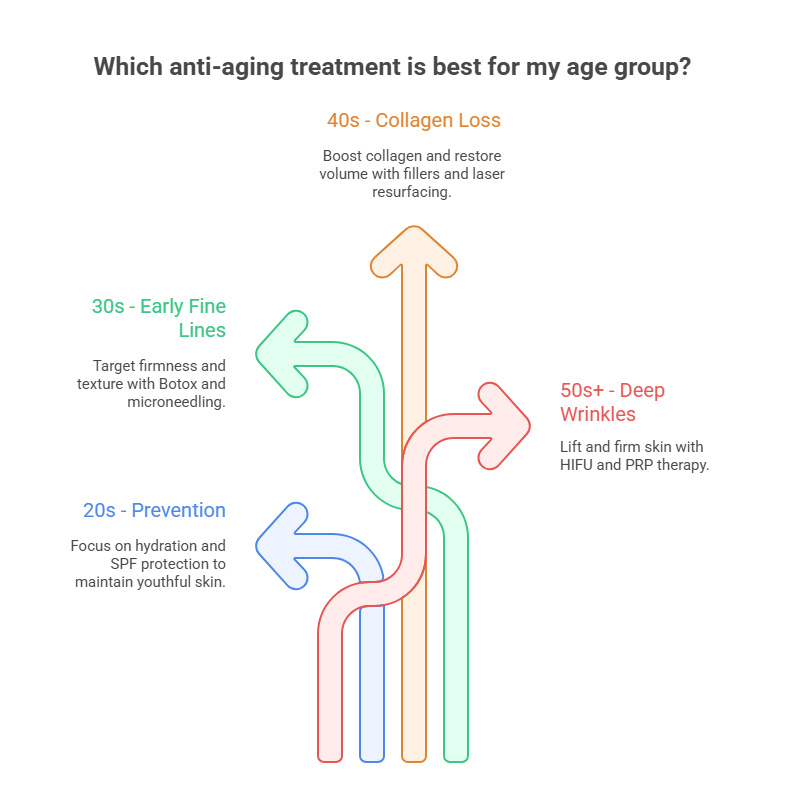
As we age, our skin changes in different ways, requiring tailored treatments. Whether you’re in your 20s and focusing on prevention or in your 50s and targeting deeper wrinkles, there’s a treatment for every stage. Here’s a breakdown of the best anti-aging treatments for each age group.
Anti-Aging in Your 20s (Prevention)
In your 20s, the goal is prevention. While you may not have fine lines or wrinkles yet, your skin is starting to lose its youthful glow and elasticity. The key at this stage is to protect your skin and maintain its hydration.
- Prevention: Focus on hydration with a light moisturiser and SPF protection to keep your skin glowing.
Treatments:
-
- LED Light Therapy: Helps support collagen activity and may assist in maintaining skin texture over time.
- Vitamin C Serums: Brighten skin and protect against environmental damage.
- Gentle Chemical Peels: Remove dead skin cells to improve skin texture and brightness.
Anti-Aging in Your 30s (Early Fine Lines)
In your 30s, you may start noticing fine lines, especially around the eyes and forehead. Collagen production slows, and skin starts to lose its firmness.
- Treatment Focus: Firmness and texture.
Treatments:
-
- Botox: Great for targeting dynamic wrinkles like frown lines and crow’s feet.
- Microneedling: Supports collagen stimulation and helps improve the appearance of early lines and skin texture.
- Hyaluronic Acid Fillers: Helps restore volume loss, especially around the cheeks and under the eyes.
Anti-Aging in Your 40s (Collagen Loss)
In your 40s, skin starts to lose more collagen and elasticity. Wrinkles become more noticeable, and skin can start to look dull and thinner. Now is the time to boost collagen and restore volume.
- Treatment Focus: Supporting collagen renewal, restoring volume, and improving the appearance of wrinkles.
Treatments:
-
- Dermal Fillers: Used to restore volume in the cheeks, under-eye hollows, and nasolabial folds.
- Laser Resurfacing: Targets concerns such as deep wrinkles and sun damage while supporting skin texture improvement.
- Botox and Dysport: Continue to relax wrinkles and fine lines around the forehead, eyes, and mouth.
Anti-Aging in Your 50s+ (Deep Wrinkles, Skin Sagging)
In your 50s and beyond, collagen loss is significant, and skin sagging and deep wrinkles become more pronounced. At this stage, treatments should focus on lifting, firming, and repairing.
- Treatment Focus: Skin tightening, deep wrinkle reduction, and volume restoration.
Treatments:
-
- HIFU (High-Intensity Focused Ultrasound): A non-surgical treatment designed to support skin tightening in suitable candidates.
- Chemical Peels: A stronger, more intensive peel for deeper skin renewal.
- PRP (Platelet-Rich Plasma) Therapy: Uses your own blood components to support skin regeneration processes.
- Thread Lifts: A minimally invasive procedure that may help improve skin firmness and support lifting in selected patients without surgery.
Anti-Aging Treatments for Men
Men’s skin ages differently, often with concerns around forehead wrinkles, crow’s feet, and jawline sagging. Here’s a quick routine and the best clinic treatments for men.
Quick Routine
- Cleanser: Hydrating, non-stripping formula.
- Moisturiser: Lightweight, with SPF 30+.
- Serum: Vitamin C in the morning and retinol at night to support skin texture and firmness.
Clinic Treatments
- Botox: Helps reduce the appearance of forehead lines and crow’s feet.
- Dermal Fillers: Helps restore volume around the jawline and cheeks.
- Microneedling: Supports collagen stimulation and may improve skin firmness.
Common Concerns
- Forehead: Botox to help reduce the appearance of forehead lines.
- Crow’s Feet: Botox or fillers to help soften the appearance of crow’s feet.
- Jawline: Fillers to help restore lost volume and improve jawline definition.
Preventative Anti-Aging Tools & At-Home Devices
For wellness seekers, at-home devices can boost your anti-aging routine. Here are 5 essential tools dermatologists recommend:
1. Gua Sha:May help promote circulation and support a refreshed skin appearance.
2. LED Light Masks:May support collagen activity and help improve the appearance of fine lines over time.
3. Microcurrent Devices:Designed to support muscle stimulation and temporary skin firmness.
4. Sunscreen:Helps protect against UV damage that contributes to premature skin ageing.
5. Retinol:Supports collagen production and helps improve the appearance of fine lines and skin texture.
6. Jade Roller:May help reduce puffiness and support a refreshed skin appearance.
7. Hyaluronic Acid Serum:Hydrates the skin and helps improve the appearance of fine lines.
Cost of Anti‑Aging Treatments in Australia
Here’s a snapshot of typical costs (per session or per unit/area) for common anti-aging and aesthetic procedures across Australian clinics.
*Prices vary a lot based on clinic, provider (dermatologist vs nurse/therapist), area treated, product used, and number of units/sessions required.
Why Choose Skinduced Aesthetics Clinic for Your Anti‑Aging Needs
At Skinduced Aesthetics Clinic in Newcastle, we understand that every person’s skin is different, so we never use a “one size fits all” approach. Instead, we offer personalised anti‑aging and skin rejuvenation treatments, tailored to your unique skin type, age, and aesthetic goals.
At Skinduced Aesthetics Clinic, we offer a wide range of treatments, from injectables used to help reduce the appearance of wrinkles and dermal fillers to skin-tightening, microneedling, laser resurfacing, and more.
Led by experienced clinicians, our doctor-supervised treatments are delivered in a clinical setting with a focus on safety, precision, and appropriate patient care. We provide customised treatment plans to match your skin type and goals, following a consultation to assess suitability and discuss appropriate treatment options. Using modern technology, we aim to support natural-looking results, with outcomes varying based on individual skin type, treatment plan, and aftercare.
Visit Us: Shop 19 Cameron Park Plaza, 309 George Booth Drive, Cameron Park, NSW.
Book Online / Call: 02 4081 0888
Anti-Aging Mistakes to Avoid
When it comes to anti-aging, small mistakes can set you back. Avoid these common pitfalls to support healthier-looking skin over time:
1. Skipping Sunscreen Daily: UV exposure accelerates aging, causing wrinkles and pigmentation. Always apply SPF 30+ or higher every morning.
2. Over-Exfoliating: Exfoliating too often can damage your skin’s barrier and worsen dryness. Stick to 1-2 times a week.
3. Using Harsh Products on Sensitive Areas: Areas like the eyes and lips need gentle products. Harsh chemicals can irritate sensitive skin and may contribute to premature skin changes.
4. Ignoring Your Neck and Hands:Often neglected, these areas can show signs of aging earlier than other parts of the face and body.
5. Lack of Hydration:Dehydration can contribute to dull-looking skin and the appearance of fine lines. Drinking adequate water and using a hydrating serum or moisturiser may help support skin hydration.
FAQ’s:
1. What is the best anti-aging treatment for beginners?
For beginners, Botox and microneedling are commonly chosen non-invasive treatments that may help improve the appearance of fine lines and skin texture, depending on individual factors.
2. Which facial is best for anti-aging?
HydraFacial is a popular facial treatment that cleanses, exfoliates, and hydrates the skin, which may help improve skin texture and appearance for some individuals.
3. What is the best treatment for deep wrinkles?
For deep wrinkles, Dermal fillers and laser resurfacing are commonly used options for addressing deeper wrinkles, depending on skin condition and individual suitability. Fillers restore volume in areas like the cheeks and smile lines, while laser treatments target deep wrinkles by resurfacing and improving skin texture.
4. What is the fastest anti-aging treatment with no downtime?
Botox is known for producing noticeable changes within days for many patients, with minimal downtime in most cases. It typically shows visible effects within 3–5 days and is perfect for those seeking quick and effective wrinkle reduction.
5. Which treatment lasts the longest?
Dermal fillers can provide longer-lasting effects compared to some non-injectable treatments, with duration varying based on product type and individual factors, ranging from 6 months to 2 years, depending on the type of filler and treatment area. They are excellent for restoring lost volume and reducing deep wrinkles.
6. What is the best anti-aging treatment for men?
Men commonly benefit from Botox for forehead lines and crow’s feet, dermal fillers to restore volume in the jawline and cheeks, and microneedling for overall skin texture improvement. These treatments maintain a natural, masculine look.
7. What is the best anti-aging skincare routine?
A well-rounded anti-aging skincare routine should include a hydrating cleanser, Vitamin C serum for morning use, and a retinol serum for the evening. Always finish with SPF 30+ to protect against UV damage, which accelerates aging.
8. What are the top anti-aging treatments in 2025?
In 2025, HIFU (High-Intensity Focused Ultrasound) for skin tightening, PRP (Platelet-Rich Plasma) therapy for natural rejuvenation, and non-surgical thread lifts for lifting and tightening the skin are expected to be the most sought-after treatments.
9. How can I prevent aging skin?
To prevent aging skin, apply sunscreen daily, stay hydrated, and include collagen-boosting ingredients like retinol and Vitamin C in your routine. Regularly using anti-aging treatments like Botox or microneedling can support skin health and help reduce visible signs of aging over time.
10. Are anti-aging treatments safe?
When performed by trained professionals, treatments such as Botox, dermal fillers, and microneedling are generally considered appropriate for many patients, following a proper consultation.
11. What is the cost of anti-aging treatments in Australia?
The cost of anti-aging treatments varies: Botox typically costs AU$240 per session, dermal fillers range from AU$550 to AU$850 per syringe, and laser treatments can cost AU$300–AU$800. Prices may vary based on the clinic and specific treatment area.
12. At what age is it best to start anti-aging treatments?
Many people consider anti-aging treatments in their late 20s or early 30s, depending on skin concerns and after consultation with a qualified practitioner.
