How to Get Rid of Acne Scars
Acne can leave different changes in the skin after breakouts settle. Some people notice flat red or brown marks, while others have small indentations, raised scars or uneven texture. These are not the same concern, so they may need different approaches.
This guide explains how to recognise common types of acne scarring, what home care can realistically do, and which professional options may be worth discussing. It also covers risks, recovery and how long improvement can take, so you can make an informed decision about whether treatment is right for you.
Quick Answer
Acne scars can sometimes be made less noticeable through treatments such as skin needling, laser resurfacing or other scar-specific procedures. The most suitable approach depends on whether the skin has indentations, raised scars or flat post-acne marks. Skincare can support healing and pigmentation concerns, but established structural scars rarely disappear completely with home care alone.
Unsure What Type of Acne Scarring You Have?
A skin consultation can help clarify your concerns and discuss possible treatment options, individual suitability, risks and realistic expectations.
Key Takeaways
- Flat red or dark acne marks are different from structural scars.
- Ice-pick, boxcar, rolling and raised scars may need different approaches.
- Home skincare usually cannot remove established deep indentations.
- Professional treatments may improve scar appearance, but results vary.
- Controlling active acne can help prevent further scarring.
- Choosing not to treat acne scarring is a valid decision.
Why Does Acne Leave Scars?
Acne scars form when inflammation damages the skin’s deeper layers. The skin then repairs itself, but the repair is not always perfect.
When a breakout is deep or inflamed, the surrounding tissue can be damaged. If the body produces too little collagen during healing, the skin may sit lower than the surrounding area, leaving an indentation. If it produces too much, a raised scar can form.
Several factors influence who scars and how:
- Severity of acne: deeper, more inflamed lesions carry a higher risk.
- Picking or squeezing: this increases inflammation and scarring risk.
- Delay in managing acne: longer-lasting inflammation gives more opportunity for damage.
- Genetics: some people are naturally more prone to scarring or raised scars.
This is why controlling active acne early and avoiding picking is one of the most useful things you can do.
Are Red or Dark Acne Marks the Same as Acne Scars?
No. Flat colour changes may fade gradually, while established indented or raised scars involve changes in skin structure.
There are three things people commonly describe as “acne scars”:
- Post-inflammatory erythema (PIE): flat red or pink marks left after inflammation.
- Post-inflammatory hyperpigmentation (PIH): flat brown or darker marks caused by extra melanin.
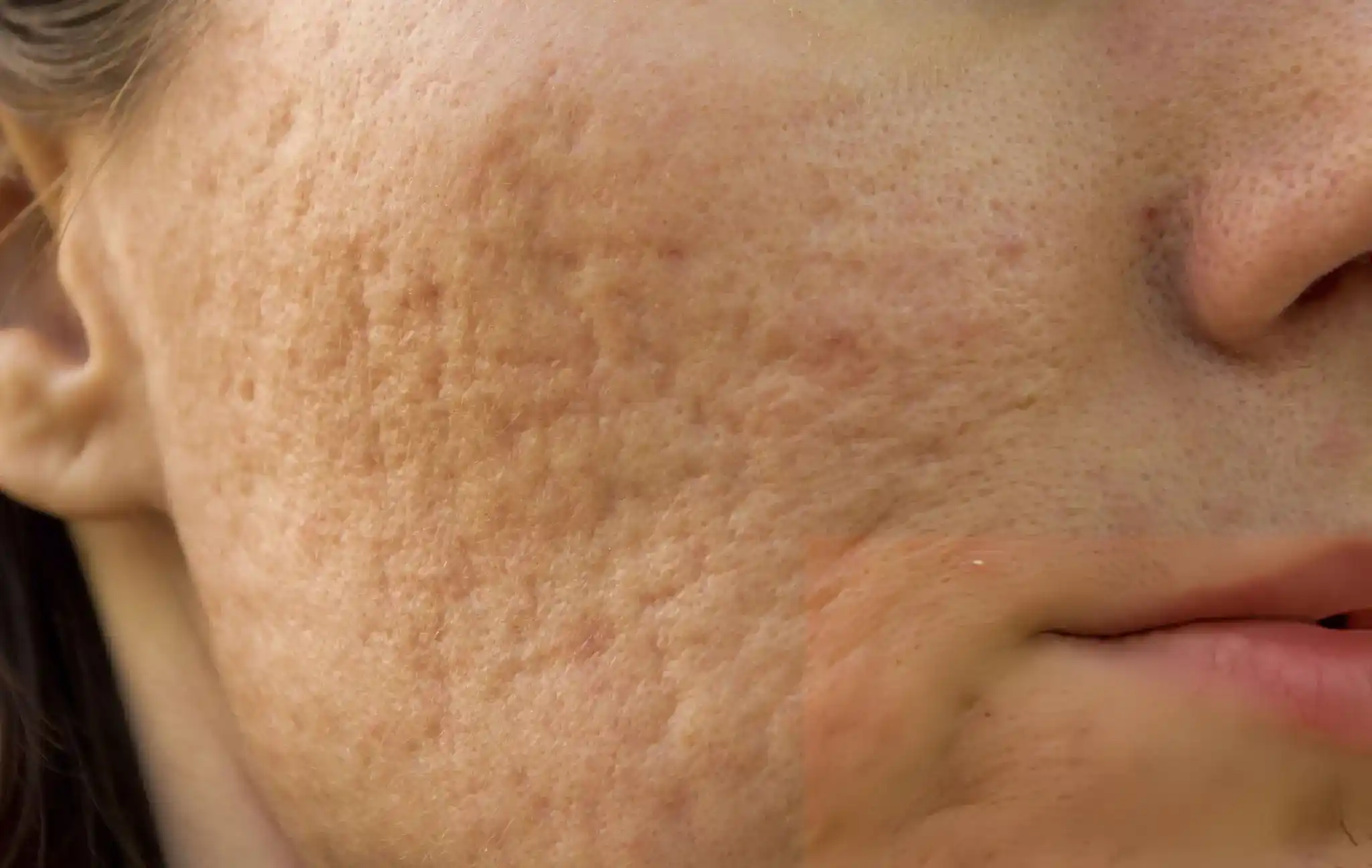
- True acne scars: pits, depressions or raised scar tissue.
Colour changes can persist for months but may fade gradually. Flat marks and structural scars can occur together, so appearance or texture alone cannot confirm the cause. For more information about lingering dark marks, read our guide to post-inflammatory hyperpigmentation.
What Are the Different Types of Acne Scars?
Atrophic scars are indented or depressed scars, and they are the most common type on the face. Scar type matters because treatment depends on depth and characteristics.
| Scar Type | Typical Appearance | Treatment Consideration |
| Ice-pick | Narrow, deep pits | May need targeted specialist procedures |
| Boxcar | Wider depressions with defined edges | Approach depends on scar depth |
| Rolling | Broad, wave-like depressions | Some scars are tethered beneath the skin |
| Raised (hypertrophic or keloid) | Firm, raised scar tissue | May require different approaches from indented scars |
This table is educational, not a self-diagnosis tool. Many people have more than one scar type, and different areas of the face can scar differently. A professional assessment can identify which types are present.
How to Get Rid of Acne Scars Naturally or at Home?
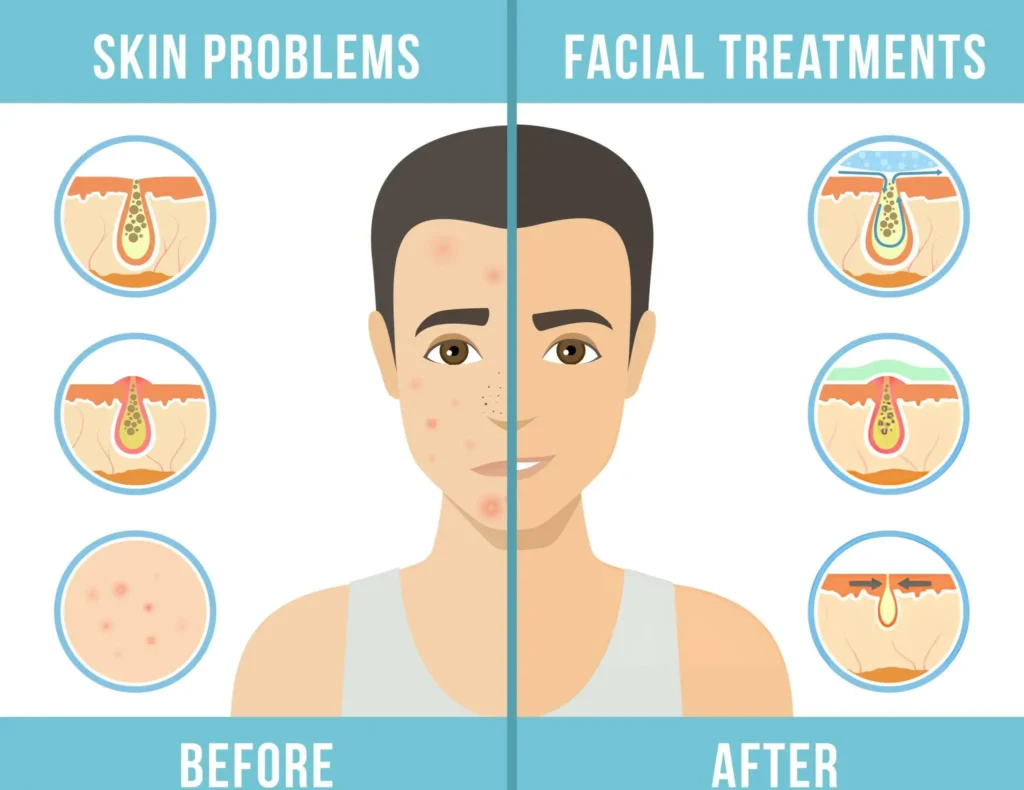
Home skincare may improve post-acne marks, reduce irritation and help prevent new scarring. There is limited evidence that home remedies can remove established pitted scars.
What may help:
- Sun protection: When the UV Index is 3 or above, use broad-spectrum SPF50+ sunscreen and other SunSmart measures to help limit further darkening of post-acne marks.
- Managing active acne so fewer inflamed spots turn into scars.
- Suitable topical ingredients: Azelaic acid or retinoids may help with some acne or pigmentation concerns, depending on individual suitability. Ask a health professional for advice; retinoids should be avoided during pregnancy or when planning pregnancy.
- Gentle skincare, since irritation can prolong redness and pigmentation.
- Do not pick or squeeze, which increases scarring risk.
Avoid lemon juice, aggressive scrubs and DIY needling. These may irritate the skin or worsen marks. If your skin is sensitive or reactive, our guide to skin barrier care explains supportive steps.
Acne Scar Treatment: Which Professional Options May Help?
Professional treatment is chosen according to scar type, depth, skin tone, active acne, medical history and goals. No single procedure suits every type of scarring.
Skin Needling and Collagen Remodelling
Skin Needling creates controlled microchannels in the skin, which prompts a healing response and collagen remodelling. It may be considered for selected shallow or indented scars, depending on assessment.
Improvement is usually gradual, and a course of sessions is often discussed rather than a single treatment. Mild redness and sensitivity are common for a short time afterwards.
RF Microneedling: Vivace and Morpheus8
RF microneedling combines fine needles with radiofrequency energy delivered at selected depths in the skin. Vivace RF Microneedling and Morpheus8 are technologies available at Skinduced that may be considered for certain textural concerns following individual assessment.
The two technologies differ in design and delivery, and neither is universally better. Skin type, scar depth and recovery preferences all influence which option, if any, may be appropriate.
Other Specialist Acne-Scar Procedures
Different scar types may need different specialist procedures. Subcision can be considered for selected tethered rolling scars, while TCA CROSS may be used for certain deep ice-pick scars. Raised hypertrophic or keloid scars require different management. A GP or dermatologist can advise whether referral for specialist scar treatment is appropriate.
Does Laser Treatment Help With Acne Scars?
Fractional and other resurfacing lasers may improve the appearance of certain indented scars. Laser types differ in how they work, how long recovery takes and their pigmentation risks.
Some vascular lasers target persistent red marks rather than structural scars. Deep ice-pick scars or tethered rolling scars may need approaches beyond laser alone.
Treatment selection also depends on skin tone, recent sun exposure and pigmentation risk. Possible complications include prolonged redness, changes in skin colour and scarring. For background on resurfacing technologies, see our fractional laser treatment guide.
How to Get Rid of Back Acne Scars?
Acne on the back, shoulders and chest can leave both pigmentation changes and raised scars. The approach can differ from facial scarring.
- The affected area is often larger.
- Ongoing breakouts can create new scars.
- Raised or keloid scarring is more common on the upper back and chest and may need specialist assessment.
- Treatment depends on scar type, location and skin characteristics.
If breakouts on the back are still active, managing them first is usually important. A GP or dermatologist can advise on appropriate acne management before scar-focused treatment is considered.
How Long Does It Take to Improve Acne Scars?
Established acne scars cannot be removed overnight or within a few days. Flat marks tend to fade gradually, while structural scars improve more slowly.
Treatments that support collagen remodelling usually work gradually and often involve several sessions. The number of sessions and degree of improvement vary between people, and no timeline can be promised.
What Are the Risks and Recovery Considerations?
Every procedure carries possible benefits and risks. These should be discussed before you decide.
- Temporary redness, swelling, tenderness or discomfort may follow skin needling and resurfacing.
- Possible complications include infection, pigment changes and scarring; laser or energy-based treatments can also cause burns.
- In October 2025, the US FDA warned of reported serious injuries with certain RF microneedling uses, including unintended fat loss and nerve damage. These reports do not establish complication rates for individual devices.
- Risks and recovery differ by procedure, skin tone, treatment settings and medical history. Active acne, infections, some medicines and a tendency to keloid scarring may affect suitability.
Follow procedure-specific aftercare instructions and seek medical advice if you develop worsening pain, spreading redness, discharge or other unexpected symptoms after treatment.
Exploring Skin Needling for Acne Scars?
Learn how skin needling works, which acne-scar concerns may be considered, and what to know about possible risks, recovery and suitability.
When Should You Seek an Acne-Scar Assessment?
An assessment may help if:
- you can’t tell whether you have scars or post-acne pigmentation
- active acne is still developing
- scars are deep, raised or changing
- you want to understand professional options, costs and risks
- home care has not improved your concern
Skinduced offers skin consultations at its Cameron Park clinic, serving Newcastle and surrounding areas. A GP or dermatologist should assess severe or persistent inflammatory acne, uncertain diagnoses, or significant raised scarring. Cosmetic scar treatment is optional.
FAQs
Can acne scars go away completely?
Flat red or dark marks may fade with time. Established indented or raised scars are less likely to disappear on their own. Professional procedures may reduce their appearance, but complete clearance can’t be guaranteed.
Can acne scars disappear in one week?
Established structural scars generally can’t disappear within a week. Some flat marks improve over time, but healing and collagen remodelling usually take longer.
Do acne-scar creams really work?
Some products may help with pigmentation, acne management or superficial texture. Creams usually can’t correct deep pits, rolling scars or substantial structural scarring.
How many skin-needling sessions might acne scars require?
There is no universal number. The plan depends on scar type, technique, medical history and response. A practitioner should explain what outcomes are realistic.
Which acne-scar treatment is best?
There is no single best treatment. Ice-pick, boxcar, rolling and raised scars can need different approaches, and suitability also depends on skin tone, recovery preferences and assessment.
