How to Fix Damaged Skin Barrier
A damaged skin barrier can make skin feel dry, tight, red, or reactive to products it once tolerated well. It often develops after over-exfoliation, harsh cleansers, too many active ingredients, weather changes, acne product overuse, or post-treatment sensitivity.
The goal is not to do more. It is to simplify the routine and give the skin time and support to settle. If irritation persists despite gentle care, a professional skin assessment can help identify what may be contributing.
Struggling with a damaged skin barrier?
Book a complimentary skin consultation at our Cameron Park clinic and our clinicians will help you understand what your skin needs to settle.
What Is a Damaged Skin Barrier?
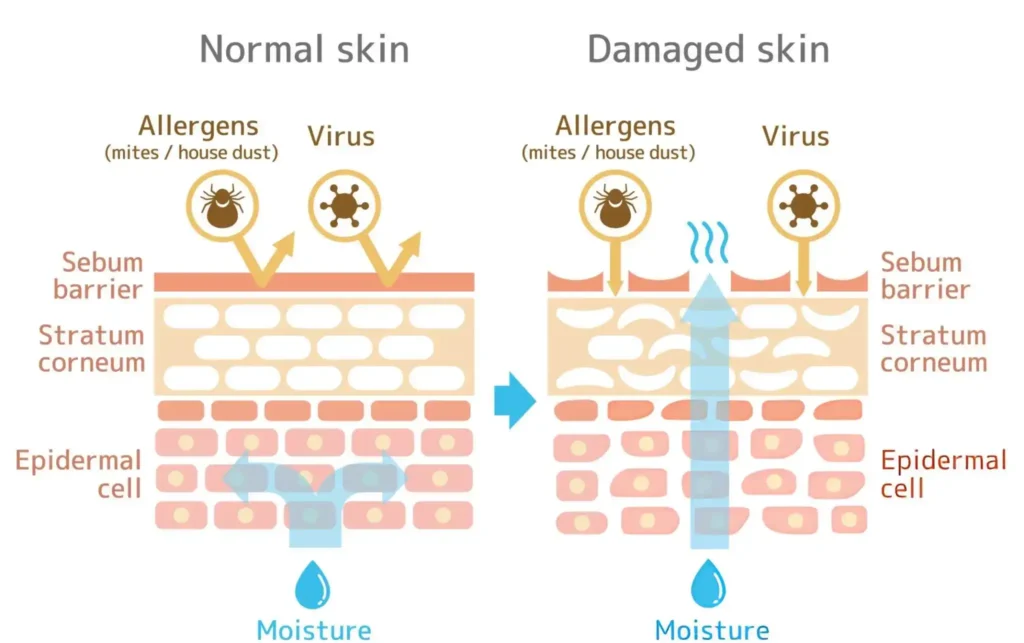
A damaged skin barrier means the outer protective layer of the skin is weakened, making it harder for the skin to hold moisture and protect itself from irritants.
The skin barrier, also called the moisture barrier or lipid barrier, sits at the surface of the skin in a layer called the stratum corneum. It works by keeping hydration in and environmental irritants out. When this layer is compromised, the skin loses moisture more easily and becomes more reactive.
Transepidermal water loss increases when the barrier is impaired. This can lead to dryness, sensitivity, and discomfort even when the rest of your skincare routine stays the same.
Damaged Skin Barrier Signs and Symptoms
Recognising the signs of a damaged skin barrier is the first step toward addressing it. Symptoms can vary between individuals, but common experiences include:
- Dryness or flaking that does not improve with moisturiser
- Tight or rough skin, especially after cleansing
- Redness or warmth across affected areas
- Burning or stinging when applying products
- Increased sensitivity to products previously tolerated
- Itching or general skin irritation
- Sudden breakouts or congestion
- Dull or uneven skin texture
- Skin that feels uncomfortable immediately after washing
These signs may also overlap with other skin conditions such as eczema, rosacea, or contact dermatitis. If symptoms are persistent, severe, or worsening, a qualified health professional should review them rather than relying on self-management alone.
How Do I Know If My Skin Barrier Is Damaged?
There is no single test for a damaged skin barrier, but certain patterns can suggest the barrier may be under stress.
A simple self-check includes:
- Products that once suited your skin now sting or burn
- Skin feels tight shortly after cleansing
- Redness, flaking, or rough patches have appeared without a clear cause
- Breakouts are appearing alongside irritation rather than in isolation
- Skin feels worse after exfoliating or applying active ingredients
These patterns suggest the skin may be reactive and in need of a gentler approach. This is not a clinical diagnosis. If you are unsure, a professional skin assessment provides a more accurate picture of what is happening with your skin.
What Causes a Damaged Skin Barrier?
Skin barrier damage can happen gradually or quickly, depending on what the skin has been exposed to. Common causes include:
- Over-exfoliation using acids, scrubs, or exfoliating toners too frequently
- Harsh foaming cleansers that strip natural oils
- Overusing active ingredients such as retinol, glycolic acid, salicylic acid, or benzoyl peroxide
- Using too many products at once without giving the skin time to adjust
- Washing with hot water or cleansing too often throughout the day
- Fragrance or alcohol-heavy skincare products
- UV exposure and sun damage
- Dry or cold air and seasonal weather changes
- Stress and poor sleep that may affect how the skin recovers
- Post-treatment sensitivity following peels, laser treatments, skin needling, or RF microneedling
Understanding the cause helps guide the right approach to recovery. In some cases, the trigger is a combination of factors rather than one single product or habit.
Damaged Skin Barrier and Acne
A weakened skin barrier can make acne-prone skin feel more irritated and reactive. When the barrier is compromised, the skin becomes more vulnerable to inflammation and external triggers, which can make existing breakouts feel worse or new ones appear.
Acne products such as benzoyl peroxide, salicylic acid, and prescription retinoids are effective for many people but can also cause barrier irritation when overused or layered too aggressively. This can create a cycle where the skin is both breaking out and reacting to the products intended to help it.
A damaged skin barrier may make acne-prone skin feel more irritated or reactive, but not every breakout is caused by barrier damage. If breakouts are persistent, inflamed, or spreading, a professional skin or medical assessment is recommended rather than adding more products.
How to Fix a Damaged Skin Barrier Step by Step
A simple approach is often the most suitable starting point for supporting a damaged skin barrier. Removing triggers and supporting recovery is more helpful than introducing new products.
Step 1: Simplify Your Routine
Reduce your routine to the basics. Use only a gentle cleanser, a barrier-supporting moisturiser, and daily SPF for a period of time. Resist the urge to introduce new products while the skin is settling.
Step 2: Pause Strong Actives Temporarily
Give your skin a break from retinol, exfoliating acids such as glycolic and salicylic acid, physical scrubs, strong acne treatments, and any peeling or resurfacing products. These can continue to irritate a compromised barrier even when used at low frequency.
Step 3: Focus on Hydration and Barrier Support
Choose products that contain barrier-supportive ingredients such as ceramides, glycerin, hyaluronic acid, panthenol, niacinamide, and squalane. These ingredients help restore moisture retention and support the skin’s natural protective function without causing additional irritation.
Step 4: Protect Skin With Daily SPF
Sun protection remains important year-round in Australia. UV exposure can further stress a compromised skin barrier and slow recovery. A gentle mineral sunscreen applied daily helps protect the skin while it settles.
If your skin feels red, tight, or reactive and you are unsure which products to stop or use, a skin consultation at Skinduced Aesthetics Clinic can help review your routine and guide a suitable barrier-supporting skincare plan.
Not sure what your skin needs?
A quick complimentary consultation helps our team assess your skin barrier and recommend a gentle, effective plan to repair it.
Best Skincare for a Damaged Skin Barrier
The best skincare routine for a damaged skin barrier is a simple and gentle one. More products are not better during this phase. The priority is calming the skin and restoring moisture balance before reintroducing anything stronger.
Key product categories to focus on:
- Gentle, non-stripping cleanser
- Barrier-supporting moisturiser
- Hydrating serum
- Fragrance-free formulations throughout the routine
- Broad-spectrum SPF daily
- Minimal active ingredients during the recovery phase
Ingredients that may help support skin barrier repair include:
- Ceramides to help reinforce the lipid barrier
- Hyaluronic acid for surface hydration support
- Glycerin for moisture retention
- Niacinamide to support barrier function and reduce redness
- Panthenol to help soothe and support skin comfort
- Colloidal oatmeal or allantoin for calming sensitive or irritated skin
- Squalane for lightweight hydration without heaviness
Keep the routine consistent and avoid switching between products frequently while the skin is recovering.
Gentle Cleanser and Moisturiser for Damaged Skin Barrier
A gentle cleanser for a damaged skin barrier should not leave the skin feeling tight, dry, or uncomfortable after use. Look for non-foaming or cream-based options that are pH-balanced and free from fragrance, alcohol, and harsh surfactants.
A moisturiser for a damaged skin barrier should focus on hydration and barrier support rather than active treatment. Fragrance-free formulas with ceramides, glycerin, or panthenol may help support skin comfort during the recovery phase. Around delicate areas such as the under-eye, a stressed barrier can also make discolouration more visible — our guide on how to treat dark circles covers related care.
At Skinduced, suitable skincare options such as Aspect Dr Mild Cleanser, Hyaluronic Serum, Redless, or a Soothing Kit may be discussed during consultation for dry, reactive, or barrier-stressed skin, depending on individual suitability.
What to Avoid While Repairing Your Skin Barrier
Knowing what to remove from your routine is just as important as knowing what to add.
Avoid the following during skin barrier recovery:
- Harsh scrubs or physical exfoliants
- Daily use of exfoliating acids
- Retinol or retinoids until the skin has settled
- Strong foaming cleansers
- Hot water when cleansing
- Fragrance-heavy or alcohol-based products
- Trying multiple new products at once
- Picking or squeezing breakouts
- Booking strong skin treatments before the barrier has recovered
If your skin barrier is compromised, stronger treatments such as chemical peels, laser treatments, skin needling, Morpheus8, or RF microneedling may need to be delayed until the skin has settled and a proper assessment confirms suitability. Your clinician can advise on the right timing based on your skin’s current condition.
Can a Skin Barrier Be Permanently Damaged?
Many cases of skin barrier stress improve with gentle care and the removal of contributing triggers. The skin has a natural ability to repair and recover when given the right support and time.
However, not all cases resolve quickly or easily. Some people have ongoing conditions that affect barrier function and require professional medical guidance beyond general skincare changes.
Many cases of barrier irritation improve with a suitable routine, but ongoing redness, burning, cracking, signs of infection, or severe and persistent sensitivity should be reviewed by a qualified health professional. Self-managing without assessment in these cases may delay appropriate care.
How Long Does a Damaged Skin Barrier Take to Repair?
Recovery time varies significantly between individuals. Mild irritation caused by a temporary product change or short-term over-exfoliation may settle within days to a few weeks with a simplified routine.
More persistent sensitivity, longer-term barrier stress, or irritation with an underlying cause may take longer to resolve. There is no single timeline that applies to everyone.
Recovery depends on the cause, skin type, product use, general health, and whether the trigger has been fully removed. Individual response to barrier-supporting skincare also varies. A professional skin assessment can help identify ongoing triggers and guide the most suitable recovery approach.
When to Book a Professional Skin Consultation
Home care and a simplified routine help many people with mild barrier irritation. However, professional assessment may be useful if symptoms continue or become harder to manage.
Consider booking a skin consultation if:
- Skin remains red, dry, burning, or reactive despite simplifying your routine
- Products continue to sting, even gentle or basic formulas
- Redness, cracking, or sensitivity is getting worse
- You have post-treatment sensitivity after a skin procedure
- Breakouts appear alongside significant irritation
- You are unsure which products are causing the problem
- Your skincare advice feels confusing or conflicting
If your skin remains dry, red, irritated, or reactive, a consultation at Skinduced Aesthetics Clinic in Cameron Park can help review your routine, identify possible triggers, and discuss suitable next steps, such as personalised skincare guidance, a hydration facial, or a medical-grade facial where appropriate.
Simple Damaged Skin Barrier Repair Checklist
Use this as a practical starting point:
- Use a gentle, fragrance-free cleanser that does not strip the skin
- Apply a barrier-supporting moisturiser with ceramides, glycerin, or panthenol
- Pause retinol, exfoliating acids, and harsh actives temporarily
- Avoid hot water and over-cleansing throughout the day
- Apply SPF every morning without exception
- Keep the overall routine simple and consistent
- Introduce any new products slowly and one at a time
- Seek professional advice if irritation persists or worsens
FAQs
What are the signs of a damaged skin barrier?
Common signs include dryness, flaking, tight or rough skin, redness, burning or stinging when applying products, increased sensitivity, sudden breakouts, and dull or uneven texture. Symptoms vary between individuals.
How do I know if my skin barrier is damaged?
If products that previously suited your skin now sting, your skin feels tight after cleansing, or irritation and sensitivity have appeared suddenly, the barrier may be under stress. A professional skin assessment provides a more accurate review.
What causes skin barrier damage?
Common causes include over-exfoliation, harsh cleansers, overuse of active ingredients such as retinol and acids, hot water, fragrance-heavy products, weather changes, UV exposure, and post-treatment sensitivity.
Can a damaged skin barrier cause acne?
A damaged skin barrier may make acne-prone skin feel more irritated or reactive. It does not mean every breakout is caused by barrier damage. Persistent or inflamed breakouts should be reviewed by a qualified professional.
What cleanser is best for a damaged skin barrier?
A gentle, non-stripping, fragrance-free cleanser that does not leave skin feeling tight is generally the most suitable option during barrier recovery. Cream or low-foam formulations are often better tolerated.
What moisturiser helps a damaged skin barrier?
A barrier-supporting moisturiser containing ceramides, glycerin, hyaluronic acid, panthenol, or niacinamide can help support moisture retention and skin comfort during recovery.
Should I stop retinol if my skin barrier is damaged?
Many people find that pausing retinol and exfoliating acids temporarily helps the skin settle during barrier recovery. Individual advice depends on skin type, concern, and the products being used. A consultation helps clarify the right approach for your skin.
When should I seek professional help?
Seek professional advice if there is persistent burning, severe redness, skin cracking, signs of infection, worsening breakouts, or irritation that does not settle with a simplified routine.
Final Thoughts
Fixing a damaged skin barrier starts with simplifying your routine and giving your skin time to settle. Gentle cleansing, barrier-supporting moisturiser, hydration, and daily sunscreen are the main foundations of recovery. Removing known triggers such as strong actives, harsh cleansers, and over-exfoliation is equally important.
If your skin remains red, dry, reactive, or uncomfortable despite home care, a professional skin consultation can help identify what may be contributing and guide suitable next steps.
If you are unsure whether your skin barrier is damaged or what your skin needs next, A professional skin assessment at Skinduced can help you understand what may be contributing and guide suitable next steps.
Ready to get your skin back to healthy?
Book a complimentary, doctor-led skin assessment in Cameron Park and get a personalised barrier-repair plan for your skin.
