
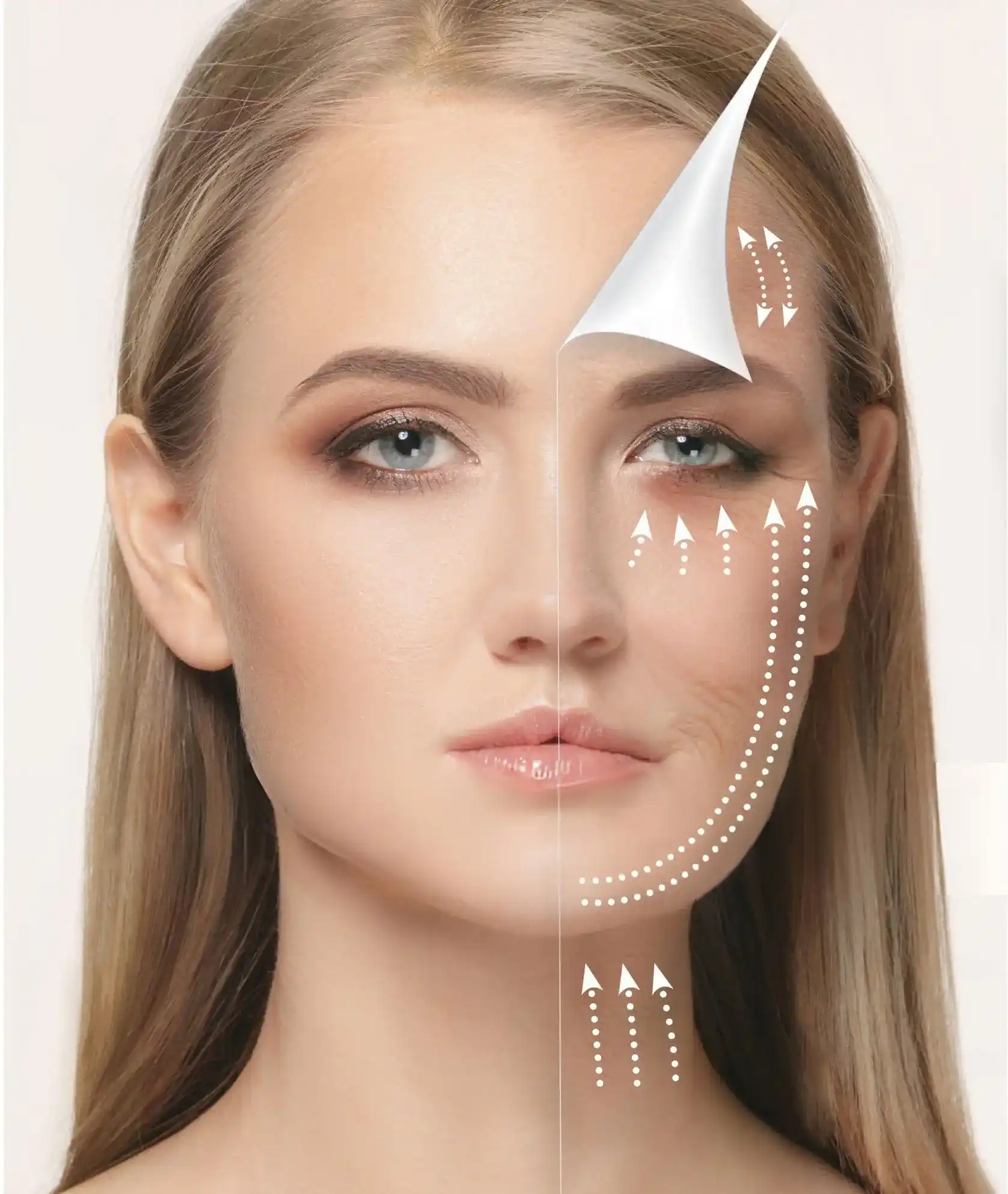
Menopause And Skin Laxity – Why Firmness Changes and What Helps
Skin can change in several ways during perimenopause and menopause. Some people notice greater dryness or sensitivity, while others become more aware of fine lines, changes in texture or reduced firmness.
Falling oestrogen levels can contribute to some of these changes, but menopause is not the only factor. Understanding the difference between dryness, skin laxity and natural ageing can help you decide which skincare measures or professional options, if any, may be worth considering.
Quick Answer
Menopause-related changes in oestrogen can affect collagen, skin hydration and elasticity, making dryness, fine lines or reduced firmness more noticeable for some people. Gentle skincare and sun protection can support skin health, while professional skin-tightening options may be considered for certain laxity concerns following individual assessment.
Considering Your Skin Tightening Options?
Learn about non-surgical skin tightening, the concerns different technologies may address, and how individual suitability is assessed.
Key Takeaways
- Changes in oestrogen can affect skin hydration, collagen and elasticity.
- Dryness, fine lines and skin laxity are different concerns.
- Gentle skincare and sun protection can support skin health.
- Non-surgical treatments may address selected concerns, but results and suitability vary.
How Does Menopause Affect Your Skin?
Oestrogen, Collagen and Skin Structure
Oestrogen helps maintain aspects of skin structure and hydration. As levels decline during perimenopause and menopause, changes in collagen and elastin can become more noticeable for some people. These are the proteins that give skin much of its firmness and ability to stretch and recover.
Hydration and Skin Barrier Changes
Changes in oestrogen levels during perimenopause and menopause may affect the skin’s moisture retention and barrier function. For some people, this contributes to dryness, tightness or increased sensitivity. Transepidermal water loss refers to moisture passing through the skin’s outer layer, but individual skin changes vary and are not always caused by hormones alone.
Why Can Skin Lose Firmness During Menopause?
Reduced firmness isn’t usually explained by one single cause. Several factors tend to interact.
Changes in collagen and elastin associated with declining oestrogen can contribute to reduced skin firmness. Natural ageing and genetics also influence skin structure, independently of menopause. Long-term UV exposure contributes to photoageing, which can affect skin elasticity and texture. Changes in underlying facial volume may also influence the appearance of firmness in some people.
It’s worth distinguishing this from surface dryness. A moisturiser can meaningfully improve how dry skin looks and feels, but it doesn’t change the deeper structural factors that influence genuine skin laxity. To understand how collagen-related changes may affect facial skin, read our guide to collagen changes in the face.
What Skin Changes Are Common During Perimenopause and Menopause?
Not everyone experiences the same changes, and not every change is necessarily related to hormones. Some people notice:
- Dryness, roughness or a tighter skin feeling
- Greater sensitivity or irritation to products previously well tolerated
- Fine lines or changes in overall skin texture
- Reduced firmness or elasticity
- Pigmentation changes or occasional breakouts
These changes are possible, not inevitable, and individual experiences vary considerably.
Is Dry Menopausal Skin the Same as Skin Laxity?
This is one of the more useful distinctions to understand, because it affects what’s likely actually to help.
| Concern | What It Describes | What May Be Considered |
| Dryness | Reduced moisture or an uncomfortable, rough surface | Gentle skincare and moisturiser |
| Fine lines and texture | Visible lines or surface irregularities | Sun protection, appropriate skincare and assessment |
| Skin laxity | Reduced firmness or looseness | Individual assessment; selected professional options may be discussed |
| Facial volume changes | Changes in underlying soft-tissue fullness or position | A separate assessment; not corrected by skin tightening alone |
A moisturiser can improve how dry skin looks and feels, but it cannot correct significant skin laxity. These concerns involve different aspects of the skin and may require different approaches.
What Helps Support Skin Health During Menopause?
Gentle Cleansing and Moisturising
Fragrance-free, non-stripping cleansers and moisturisers containing ingredients such as glycerin, ceramides or hyaluronic acid can support comfort and hydration without unnecessarily irritating more sensitive skin.
Sun Protection
When the UV Index reaches 3 or above, use broad-spectrum, water-resistant SPF50+ sunscreen alongside protective clothing, shade and other SunSmart measures. Reapply sunscreen according to the product directions, particularly after swimming or sweating.
Retinoids and Active Ingredients
Retinoids, including retinol, may help improve some aspects of fine lines, texture and photoageing, but they can irritate sensitive or dry skin. Product suitability depends on individual circumstances, and a pharmacist, GP or dermatologist can provide guidance. Retinoids should be avoided during pregnancy or when planning pregnancy.
Avoiding Unnecessary Irritation
A simple, consistent routine is usually more sustainable and comfortable than layering multiple active ingredients at once. If skincare products cause persistent stinging or irritation, our guide to skin barrier care explains possible contributing factors and supportive measures.
Can Non-Surgical Skin Tightening Help With Skin Laxity After Menopause?
Non-surgical skin tightening may be considered for some people with mild skin laxity, but these treatments do not address the hormonal changes of menopause itself.
Radiofrequency Skin Tightening
Radiofrequency (RF) treatments deliver controlled energy that heats targeted tissue and may stimulate collagen remodelling over time. Surface-applied RF treatments, such as Forma, differ from RF microneedling, which uses fine needles to deliver energy at selected depths. Individual responses vary.
RF Microneedling: Morpheus8 and Vivace
RF microneedling combines fine needles with radiofrequency energy delivered at selected depths within the skin. Skinduced offers Morpheus8 and Vivace RF Microneedling as different device options. Neither is universally more suitable; the choice depends on skin characteristics, treatment area, medical history, potential risks and individual assessment.
Clinical research has reported improvements in skin texture and laxity following RF microneedling in selected patients. However, this does not establish that the treatment specifically reverses menopause-related skin laxity, and individual outcomes remain variable.
What Can Skin Tightening Not Do, and What Are the Risks?
Skin characteristics, medical history, degree of laxity, treatment area, recovery preferences and realistic expectations all influence what may be appropriate. For an overview of the technologies available at Skinduced, explore our non-surgical skin tightening options. A clinician can then discuss whether any treatment may be appropriate for your skin concerns and medical history.
Considering Morpheus8 for Skin Firmness?
Learn how Morpheus8 works, which skin concerns may be considered, and what to know about risks, recovery and suitability.
What Can Skin Tightening Not Do, and What Are the Risks?
Non-surgical skin tightening does not restore oestrogen levels or treat menopause itself. It cannot remove substantial excess skin or reproduce the effects of surgical lifting. Outcomes vary between individuals, and choosing not to have cosmetic treatment is also a valid option.
Temporary redness, swelling, tenderness or discomfort may occur after RF-based treatments. RF microneedling also carries potential risks, including burns, infection, scarring and pigmentation changes. Serious complications such as unintended fat loss and nerve damage have been reported with certain uses of RF microneedling.
The likelihood and nature of complications depend on the procedure and individual circumstances, so your clinician should explain the relevant risks, expected recovery and alternatives before treatment.
When Should You Seek Professional Advice?
A GP or appropriate health professional is a suitable first point of contact for bothersome menopause symptoms, persistent itching or rashes, or unexplained skin changes. A new, changing, bleeding or non-healing skin spot should also be medically assessed rather than assumed to be related to menopause or normal ageing.
A skin consultation may be useful separately, if you want to discuss cosmetic concerns such as texture or firmness and explore whether professional treatment is appropriate for your skin and goals.
Would You Like to Discuss Your Skin Concerns?
At Skinduced Aesthetics Clinic in Cameron Park, a skin consultation can help clarify your concerns and discuss whether professional treatment is appropriate for your individual needs.
FAQs:
Can skin firmness improve after menopause?
Hydration and overall skin quality can be supported through skincare, and selected professional treatments may offer some improvement in laxity for suitable candidates. Outcomes vary between individuals.
Is skin laxity always caused by menopause?
No. Skin laxity usually reflects a combination of hormonal changes, genetics, chronological age, cumulative UV exposure and other individual factors; menopause is one contributor among several.
Can collagen supplements reverse menopause-related skin changes?
Collagen supplements shouldn’t be seen as a proven way to reverse skin laxity. The evidence varies by product and outcome measured, and results aren’t consistent across individuals.
Does menopausal hormone therapy tighten skin?
Menopausal hormone therapy (MHT) may be prescribed for appropriate menopause-related medical indications following individual assessment. It is not a cosmetic skin-tightening treatment. Speak with your GP about its potential benefits, risks and suitability based on your overall health.
References and Resources
- Australasian College of Dermatologists — Perimenopausal Skin: Frequently Asked Questions
- Kamp et al. — Menopause, Skin and Common Dermatoses. Part 2: Skin Disorders
- American Academy of Dermatology — Caring for Your Skin in Menopause
- Cancer Council Australia — UV Index
- Jean Hailes for Women’s Health — Menopause
- Kumar et al. (2026) — Effectiveness of Radiofrequency Microneedling in the Treatment of Dermatological Conditions: A Systematic Review
- US Food and Drug Administration — Potential Risks With Certain Uses of RF Microneedling
