How to Get Rid of Milia Around the Eyes Safely
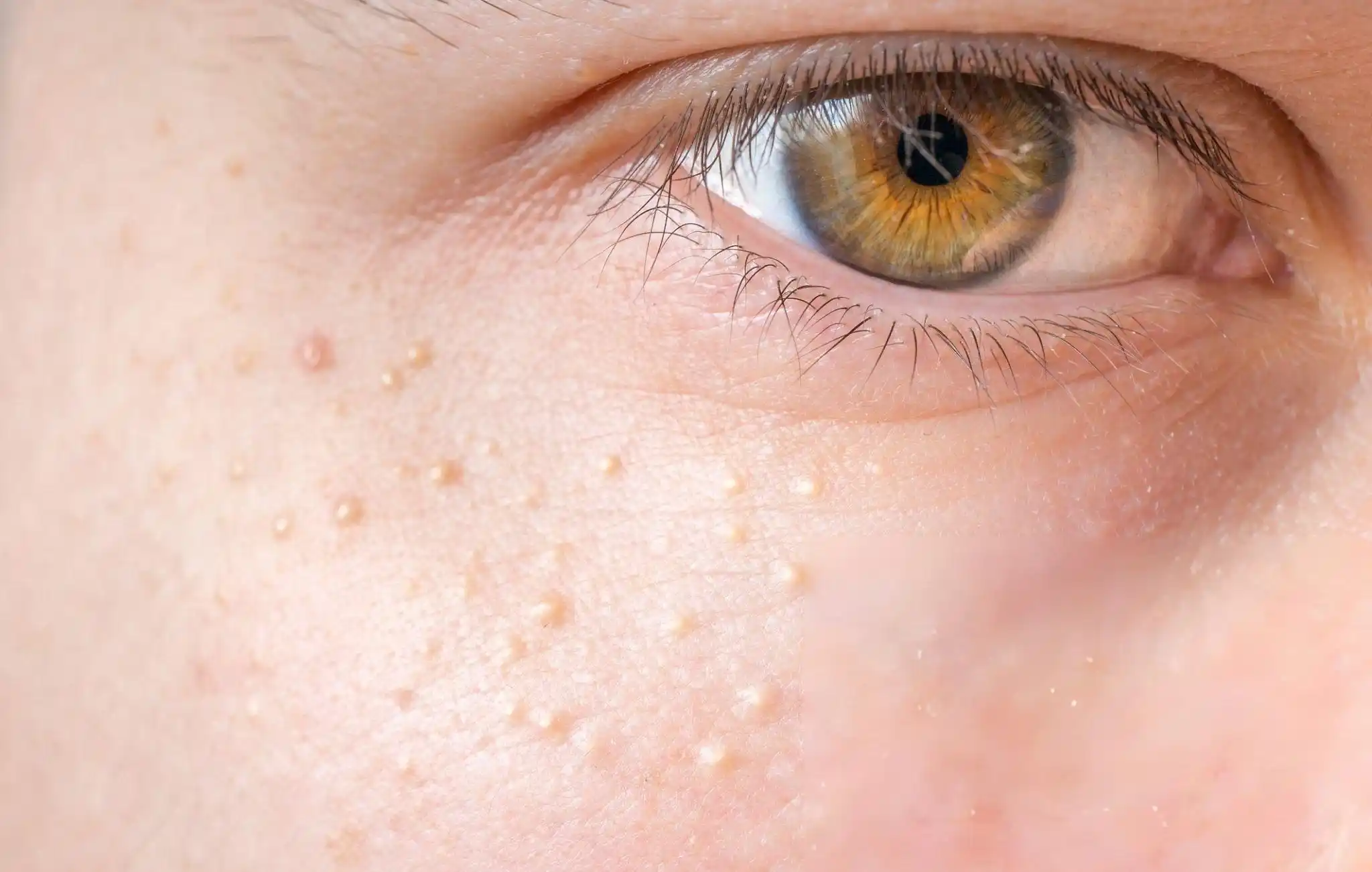
Small white or yellowish bumps around the eyes may be milia, small keratin-filled cysts that sit just beneath the skin’s surface. Milia are usually harmless and are not a form of acne. Some clear without treatment, while others may remain for several months or longer.
Avoid squeezing, piercing or scraping suspected milia around the eyes at home. Several conditions can cause similar-looking eyelid bumps, and the delicate area may be injured by DIY extraction.
Unsure what the bumps are? A skin consultation at Skinduced Aesthetic Clinic in Cameron Park can review visible skin characteristics and discuss whether skincare guidance or medical referral may be appropriate.
Key Takeaways
- Milia are small keratin-filled cysts, not acne or whiteheads.
- They commonly appear on the eyelids, under the eyes and across the cheeks.
- Some milia clear naturally, while others may persist for several months or longer.
- Do not squeeze, pierce or scrape suspected milia around the eyes at home.
- Persistent or uncertain bumps may be assessed by a GP, dermatologist or appropriately qualified practitioner.
- Treatment is not always necessary and depends on the diagnosis, location and individual preference.
What Are Milia?
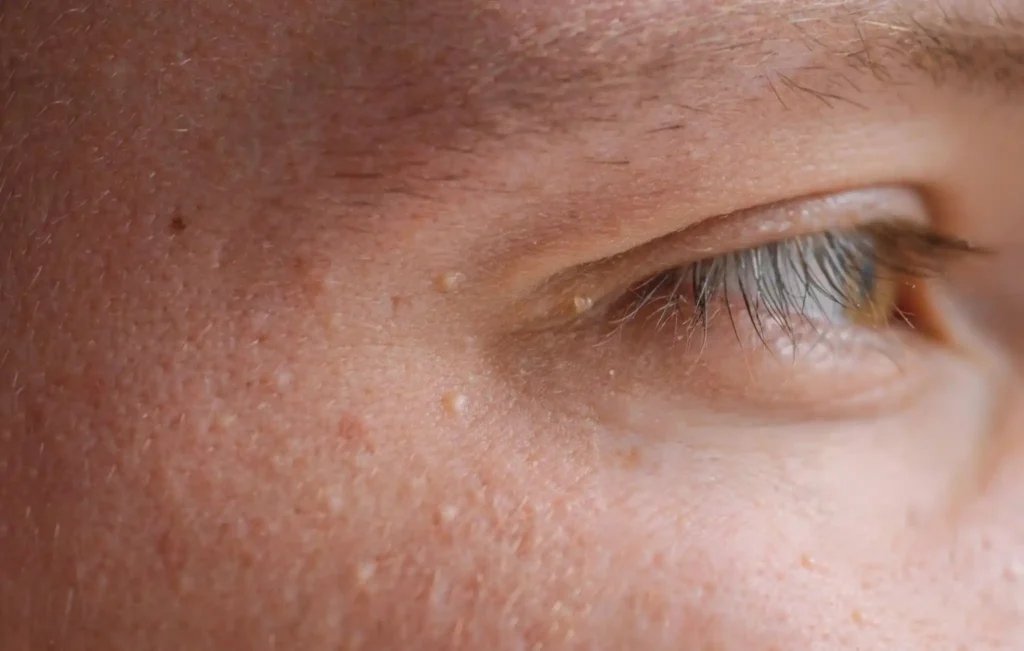
Milia are small, firm, dome-shaped bumps that form when keratin becomes trapped beneath the skin surface. They typically measure one to two millimetres and appear white, cream or slightly yellow.
They are not caused by oil, bacteria or clogged pores like acne. Milia sit within a small cyst wall beneath the epidermis. According to DermNet, milia are benign superficial keratinous cysts that can occur at any age.
Common locations include:
- Under the eyes and on the lower eyelids
- Upper eyelids and brow bone area
- Cheeks, nose and forehead
- Around the mouth
Why Do Milia Form Around the Eyes?
Milia form when keratin becomes enclosed within a tiny cyst near the surface of the skin. The exact reason they appear is not always clear.
Primary milia may develop without an obvious injury or skincare trigger. They commonly occur around the eyelids, cheeks and forehead.
Secondary or traumatic milia may develop while the skin is healing after an injury, blistering condition, burn or certain skin procedures. In rare cases, milia have also been associated with particular topical medicines.
Thick or occlusive skincare products are sometimes suspected when bumps develop around the eyes, but one product should not automatically be blamed. Milia can occur even in people who follow a careful skincare routine, and they are not caused by poor hygiene.
Can You Remove Milia at Home?
Home removal of milia around the eyes is not recommended. The skin in this area is very thin, highly vascular and close to the eye itself.
Risks of home extraction include:
- Skin tearing or bruising
- Infection from unsterilised tools
- Scarring or post-inflammatory pigmentation
- Potential eye injury
Some exfoliating ingredients and topical retinoids affect skin-cell turnover, but ordinary facial products may irritate the delicate eye area. Do not apply them directly to the eyelids unless the product is formulated for that area or a qualified healthcare professional has advised their use.
If the bumps persist or you are unsure what they are, assessment by a GP, dermatologist or another appropriately qualified health practitioner may be appropriate.
How Are Persistent Milia Professionally Managed?
Many milia do not require treatment and may clear naturally. When a bump persists, the diagnosis is uncertain, or a person would like to discuss removal, assessment by a GP, dermatologist or appropriately qualified practitioner may be appropriate.
Depending on the confirmed diagnosis, location and practitioner’s scope of practice, options may include:
De-roofing and extraction: A small opening may be created using sterile equipment so the keratin content can be removed.
Curettage or diathermy: These methods may be considered for selected lesions following assessment.
Other procedures: In selected cases, a medical practitioner may discuss additional options. Suitability depends on the confirmed diagnosis, the lesion’s proximity to the eye and the practitioner’s scope of practice.
All procedures have potential risks, which may include discomfort, redness, irritation, infection, pigment changes or scarring. The practitioner should explain the proposed procedure, expected recovery, alternatives and possible risks before treatment.
Skincare Tips for Milia-Prone Eye Areas
Milia cannot always be prevented, but gentle skincare may help avoid unnecessary irritation around the eyes.
- Cleanse the area gently without scrubbing.
- Remove eye makeup carefully without pulling or rubbing the skin.
- Use products specifically formulated for use around the eye contour.
- Review newly introduced or very heavy products if bumps appear after you begin using them.
- Avoid squeezing, picking or repeatedly touching the bumps.
- Apply broad-spectrum sunscreen to exposed facial skin each day.
- Do not apply facial acids, exfoliants or retinoids directly to the eyelids unless the product is intended for that area or a qualified professional has advised you to use it.
These steps cannot guarantee that new milia will not develop.
Milia vs Other Bumps Around the Eyes
| Concern | Typical appearance | Common characteristics |
| Milia | Small, firm, white or pale-yellow bumps | Keratin-filled cysts; usually not inflamed |
| Whiteheads | Small white or skin-coloured bumps | Closed comedones caused by a blocked hair follicle and associated with acne |
| Syringomas | Small skin-coloured or yellowish bumps | Benign sweat-duct growths, often clustered |
| Xanthelasma | Flat or slightly raised yellow patches | Commonly develop around the eyelids |
| Sebaceous hyperplasia | Skin-coloured or yellowish bumps | Caused by enlarged sebaceous glands |
These descriptions cannot confirm a diagnosis. Bumps that persist, change, become painful or sit close to the eye should be assessed by an appropriate healthcare professional.
When Should You Seek Professional Advice?
Most milia are harmless and do not require urgent treatment. Arrange an assessment with a GP or dermatologist if:
- The bumps grow, change colour or become painful.
- The surrounding skin becomes red, warm or swollen.
- Several bumps appear suddenly or in an unusual pattern.
- You are unsure whether the concern is milia.
- The bump is on or very close to the lash line.
- The bumps persist, and you would like to discuss management options.
Speak with a doctor or optometrist promptly if:
- The eye itself becomes painful or red.
- There is significant discharge or swelling.
- Your vision changes or becomes blurred.
Sudden vision changes, vision loss or severe eye pain require urgent medical attention.
Skin Consultation for Eye-Area Bumps in Cameron Park
Small bumps around the eyes can have several causes. A consultation at Skinduced Aesthetic Clinic in Cameron Park can review how the area visibly presents, discuss your current skincare and help determine whether skincare guidance or medical referral may be appropriate.
Skinduced’s OBSERV Skin Analysis provides an observational review of visible skin characteristics. It does not diagnose milia or confirm whether a bump is medically suitable for removal.
FAQs
Can milia go away on their own?
Some milia clear naturally within weeks or months, while others may persist for longer. Persistent milia do not necessarily require removal unless they cause concern or the diagnosis is uncertain.
Does retinol help with milia?
Topical retinoids may sometimes be considered by a healthcare professional for widespread milia. Do not apply an ordinary facial retinoid directly to the eyelids unless the product is designed for that area or a qualified professional has advised its use.
Is milia removal painful?
The level of discomfort varies according to the procedure, location and individual sensitivity. Before proceeding, the practitioner should explain what the procedure may feel like, whether anaesthesia is used, possible risks and expected aftercare.
Can milia come back after removal?
New milia can develop in the same or different areas over time. New milia can develop in the same or a different area after an individual cyst has been removed. Gentle skincare may help avoid irritation, but it cannot guarantee that new milia will not form.
Who Should Assess Milia Close to the Eye?
A GP or dermatologist can assess uncertain skin lesions and discuss medical removal options. An optometrist or eye-care professional may be more appropriate when the bump affects the eye, lash line or vision.
This information is general only and does not replace personalised skin or medical advice. Treatment suitability and outcomes vary between individuals. Uncertain, changing or painful skin concerns should be assessed by a GP, dermatologist or qualified skin professional.