Sagging Jawline & Jowls – Non-Surgical Skin Tightening Options in Newcastle
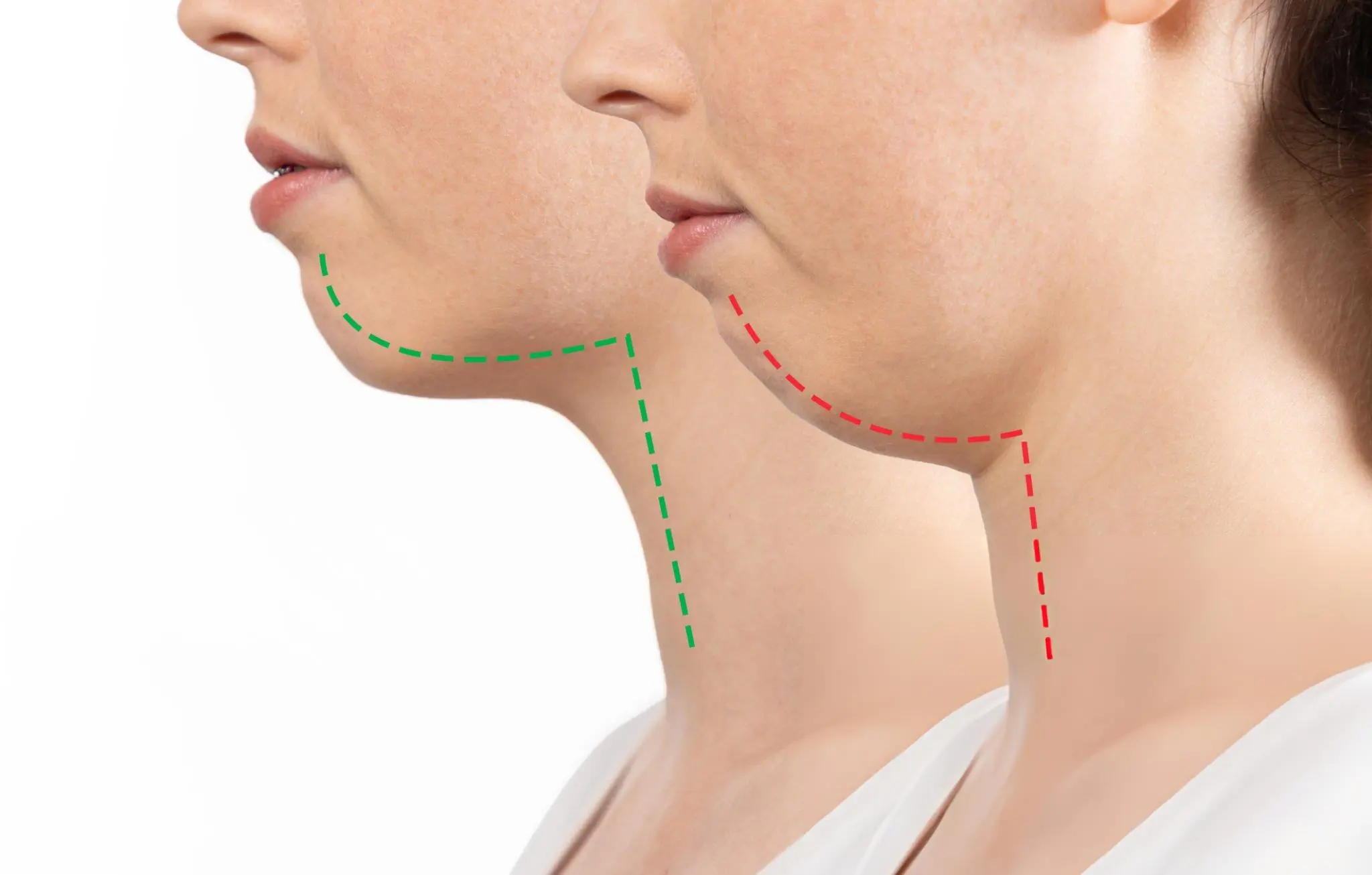
Many people notice changes around their jawline over time, even when they still feel like themselves. A softer jaw contour, less definition in photos, or the appearance of jowls near the chin can be common concerns as the lower face changes with age.
This is one of the most common concerns raised during facial consultations, and it has a clear physiological explanation. Understanding why it happens and what genuinely can and can’t be addressed without surgery helps set realistic expectations before considering any treatment path.
Quick Answer
A sagging jawline and jowls can develop due to age-related changes such as reduced collagen, changes in facial volume and decreased skin firmness. Non-surgical options like radiofrequency skin tightening may help improve the appearance of mild to moderate skin laxity. Still, suitability depends on individual concerns and does not replace the results of a surgical facelift.
Explore Skin Tightening Options for Sagging Skin
Learn more about non-surgical skin tightening, including how it works, the concerns it may help address and whether it may be suitable for improving skin firmness and lower-face laxity.
Key Takeaways
- Jowls and jawline sagging result from collagen loss, fat pad descent, and weakened retaining ligaments, not a single cause.
- Genetics, sun exposure, and hormonal changes (particularly post-menopause) all influence how early and how significantly this occurs.
- Non-surgical skin tightening (RF microneedling) can support collagen remodelling for mild-to-moderate laxity.
- Volume loss and true skin excess are different problems and may need different approaches, sometimes both.
- A doctor-led assessment can help determine whether non-surgical treatment is realistic for your degree of laxity, or whether a surgical referral is more appropriate.
What Causes a Sagging Jawline and Jowls?
The lower face changes through several overlapping processes that typically become noticeable from the mid-thirties onward and progress with age.
Some people describe these changes as a drooping jawline, slack jawline or a softer lower-face appearance as definition around the jaw becomes less noticeable.
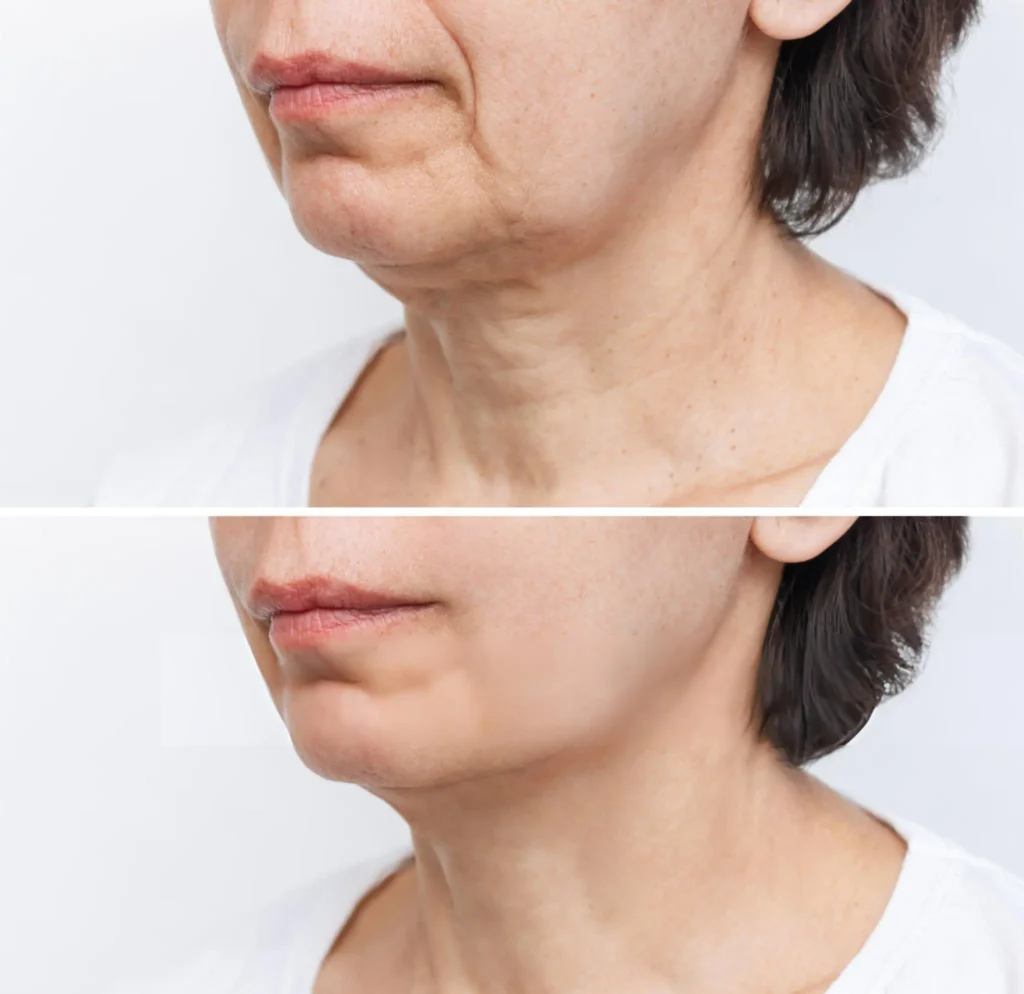
Collagen and elastin decline: Collagen production gradually decreases with age, and hormonal changes such as menopause can contribute to further changes in skin firmness and elasticity. This reduces the skin’s structural support and elasticity, allowing it to loosen over time.
Facial fat pad descent: The face contains distinct fat compartments that sit in specific positions when we’re young. With age, these fat pads lose volume and shift downward, contributing to the appearance of jowls as fat that once sat higher on the cheek settles along the jawline.
Weakening of retaining ligaments: The supporting structures beneath the skin gradually change over time, which can affect how the cheeks, jawline and lower face are supported.
Bone remodelling: The jawbone itself undergoes subtle resorption with age, reducing the underlying support structure that skin and soft tissue rely on.
Gravity and repetitive movement: Constant gravitational pull over decades, combined with repeated facial movement, compounds the structural changes described above.
Sun exposure and lifestyle factors: UV exposure accelerates collagen breakdown through a process called photoaging. Smoking, significant weight fluctuation, and poor sleep can further accelerate visible changes to the jawline.
Is It Skin Laxity, Volume Loss, or Both?
This distinction genuinely matters for treatment planning, and it’s one of the most important things assessed during a consultation.
| Concern | What’s Happening | Non-Surgical Options That May Help |
| Skin laxity (crepey, loose skin texture) | Reduced collagen/elastin causing the skin itself to lose firmness | RF skin tightening, RF microneedling |
| Volume loss (hollowing in cheeks, flattened jawline) | Fat pad descent or reduction leaving areas under-supported | Dermal filler, addressed separately from skin tightening |
| Muscle banding (vertical neck bands) | Platysma muscle changes in the neck | Requires separate assessment; not addressed by skin tightening alone |
| True skin excess (visible hanging skin, advanced jowling) | Significant, longstanding collagen loss with excess tissue | Non-surgical options have limited effect; surgical consultation may be more appropriate |
Many patients present with a combination of these, which is exactly why a generic, one-size-fits-all treatment recommendation isn’t appropriate without individual assessment.
What Are Jowls on the Face?
Jowls are areas of loose skin or soft tissue that appear along the lower face, usually around the cheeks, jawline and chin. They can make the jawline look less defined and may become more noticeable as skin elasticity decreases and facial structures change over time.
These changes can also affect the chin line, creating a softer transition between the cheeks, jawline and chin area.
Jowls are not caused by one single factor. Changes in collagen levels, facial volume, skin firmness, genetics and natural ageing processes can all influence how the lower face changes.
Non-Surgical Skin Tightening Options
RF Microneedling (Morpheus8 and Vivace)
Radiofrequency microneedling combines controlled micro-injury with heat energy delivered into the deeper layers of the skin, which can support new collagen and elastin production over the following months. At Skinduced Aesthetic Clinic, we offer both Morpheus8 and Vivace RF Microneedling, which differ in penetration depth and delivery method; a doctor-led assessment helps determine which is more suitable for your skin and the degree of laxity.
This approach is generally suitable for some people with mild to moderate jawline laxity, where the primary concern is skin quality and firmness rather than significant excess tissue. Results build gradually as new collagen forms and typically require a course of sessions rather than a single treatment.
Considering Morpheus8 for Skin Firmness?
Learn more about Morpheus8, including how the technology works, areas that may be considered, what to expect and whether it may be suitable for your skin concerns.
What Can Non-Surgical Skin Tightening Realistically Improve?
It’s important to be direct about limitations here, because setting realistic expectations is part of good clinical care. Non-surgical skin tightening does not remove excess skin and will not replicate the results of a surgical facelift for patients with significant, longstanding jowling or sagging skin. For more advanced laxity, the improvement from RF-based treatment is typically modest rather than dramatic, and a referral for surgical opinion may be the more honest recommendation.
When Should You Consider a Consultation?
A professional assessment is worth considering if you’ve noticed:
- A jawline that appears less defined in photos than it does in person
- Early jowl formation, particularly near the chin
- Skin that feels looser or less “bouncy” than it used to
- Uncertainty about whether your concern is skin laxity, volume loss, or both
Trying to identify the cause of jawline changes without assessment can be difficult, and many at-home products marketed for jawline tightening may not address the deeper structural factors involved in skin laxity.
If you’re in Newcastle or the surrounding Hunter region and have noticed changes to your jawline definition, a skin consultation can help clarify what’s actually happening structurally and whether non-surgical treatment is a realistic option for your presentation.
Ready to Discuss Your Skin Concerns?
Book a consultation with the Skinduced team to discuss your jawline, jowl or skin firmness concerns and understand which options may be suitable for you.
Prevention and Supportive Measures
While collagen decline is a natural part of ageing that cannot be entirely prevented, some factors within your control can support slower progression:
- Daily broad-spectrum SPF, which remains the single most evidence-supported measure against photoageing-related collagen breakdown
- Avoiding smoking, which accelerates collagen degradation independently of age
- Maintaining stable weight, as repeated significant weight fluctuation can affect skin elasticity over time
- Addressing sleep quality and general health, both of which influence skin repair processes
None of these measures reverses existing laxity, but they may help slow the rate of further change.
FAQs
At what age does jawline sagging typically start?
This varies considerably between individuals based on genetics, sun exposure history, and hormonal factors. Most people begin noticing subtle changes from their mid-to-late thirties, with more visible jowling often becoming apparent in the forties and fifties, particularly around menopause for women.
Can RF microneedling fix jowls completely?
RF microneedling may help support skin firmness and improve mild to moderate laxity, but it does not remove excess skin. For more established jowling, results are typically supportive rather than transformative, and expectations should be discussed individually during assessment.
How many RF microneedling sessions are usually needed?
This depends on the individual’s skin condition and treatment goals, and is determined during consultation rather than following a fixed protocol for everyone.
Is a sagging jawline always a sign of ageing, or can younger people experience it?
While it’s most commonly age-related, factors such as genetics, significant weight loss, sun exposure history, and certain medical conditions can contribute to earlier changes in some individuals.
When is surgery a better option than non-surgical treatment?
Surgical consultation tends to be more appropriate when there is significant excess skin or advanced laxity that non-surgical energy-based treatments are unlikely to improve meaningfully. This is something best determined through individual clinical assessment rather than by degree of concern alone.
If you’re noticing early signs of jawline sagging or jowl formation and want an honest assessment of whether non-surgical treatment is appropriate for your presentation, book a consultation with our team in Newcastle to discuss your options.
References and Resources
This article is based on general information about facial ageing, skin structure and non-surgical aesthetic options.
Further reading:
- American Academy of Dermatology – Skin Ageing and Wrinkles Information
https://www.aad.org/public/everyday-care/skin-care-secrets/prevent-wrinkles - Australasian College of Dermatologists – Cosmetic Dermatology Information
https://www.dermcoll.edu.au/for-patients/ - DermNet – Ageing Skin Information
https://dermnetnz.org/topics/ageing-skin
