
Non-Surgical Fat Reduction – Understanding Effective Options
Non-surgical fat reduction refers to cosmetic body-contouring procedures intended to change the appearance of selected areas without surgical fat removal. People often explore these options for areas such as the abdomen, thighs, flanks or upper arms.
Different technologies work in different ways, and not every treatment is suitable for every type of body fat. This guide explains the available approaches, what they can and cannot achieve, possible risks, and the questions worth asking before considering treatment.
Quick Answer
Non-surgical fat reduction uses technologies such as controlled cooling or other energy-based methods to address selected areas of subcutaneous fat without surgical removal. It is intended for body contouring, not significant weight loss or visceral fat reduction. Suitability, outcomes, recovery and risks vary by device and individual assessment.
Considering Non-Surgical Body Contouring?
Discuss your body concerns with the Skinduced team and learn about available treatment options, individual suitability, potential risks and realistic expectations.
Key Takeaways
Non-surgical body contouring targets particular aesthetic concerns rather than treating obesity.
Belly, thigh, arm and flank concerns may require different treatment approaches.
Subcutaneous fat and visceral fat are different; cosmetic devices do not address visceral fat.
Cryolipolysis, thermal-based approaches and radiofrequency devices should not be treated as interchangeable.
Results, risks and the number of sessions depend on the procedure and individual circumstances.
What Is Non-Surgical Fat Reduction?
Non-surgical fat reduction, also called non-invasive fat reduction in many search results, refers to cosmetic procedures that aim to change the contour of selected body areas without incisions or surgical removal of fat. Some devices use controlled cooling to affect fat cells beneath the skin. Other technologies use heat, ultrasound or radiofrequency, although their intended effects and supporting evidence differ.
These approaches generally focus on relatively small, localised contour concerns. They are not alternatives to medical weight management and should not be expected to reduce visceral fat, which surrounds internal organs.
Which Body Areas Can Non-Surgical Fat Reduction Address?
Non-surgical body-contouring procedures may be considered for selected areas where subcutaneous fat contributes to a visible contour concern. The areas suitable for treatment depend on the device, available applicators, medical history and individual anatomy.
| Body area | Main consideration |
|---|---|
| Abdomen and lower belly | Whether the concern involves subcutaneous fat, visceral fat, loose skin or a combination |
| Inner and outer thighs | Amount and distribution of subcutaneous fat, skin quality and device suitability |
| Flanks and waist | Localised fullness versus broader changes in body composition |
| Upper arms | Difference between fat deposits and loose skin |
| Back and bra-line area | Whether the tissue and treatment area are suitable |
| Under the chin | Distinguishing localised fullness from facial and neck laxity |
An area being listed does not establish that treatment will be suitable or effective for an individual. Skinduced offers body treatments in Newcastle, with options discussed following assessment.
How to Get Rid of Belly Fat
Reducing belly fat depends partly on which type of fat is contributing to the concern. Fat beneath the skin differs from fat stored deeper in the abdomen, and the approaches used to address them are not interchangeable.
Subcutaneous Belly Fat vs Visceral Fat
Subcutaneous fat is the layer of fat beneath the skin. It contributes to visible body contours and may be considered in certain non-surgical body-contouring procedures.
Visceral fat is stored deeper in the abdomen around internal organs. Excess visceral fat is associated with health risks, including type 2 diabetes and cardiovascular disease. Cosmetic fat-freezing and body-contouring devices do not treat visceral fat.
What Actually Helps Reduce Belly Fat?
For people wanting to reduce overall abdominal fat, healthy eating, regular physical activity, adequate sleep and sustainable weight management are more appropriate starting points than cosmetic treatment.
Exercise and dietary changes can help reduce overall body fat, but you generally cannot choose exactly where your body loses fat first. If abdominal fat is a health concern, a GP or accredited practising dietitian can help assess appropriate options.
Can Non-Surgical Treatment Help With Stomach Fat?
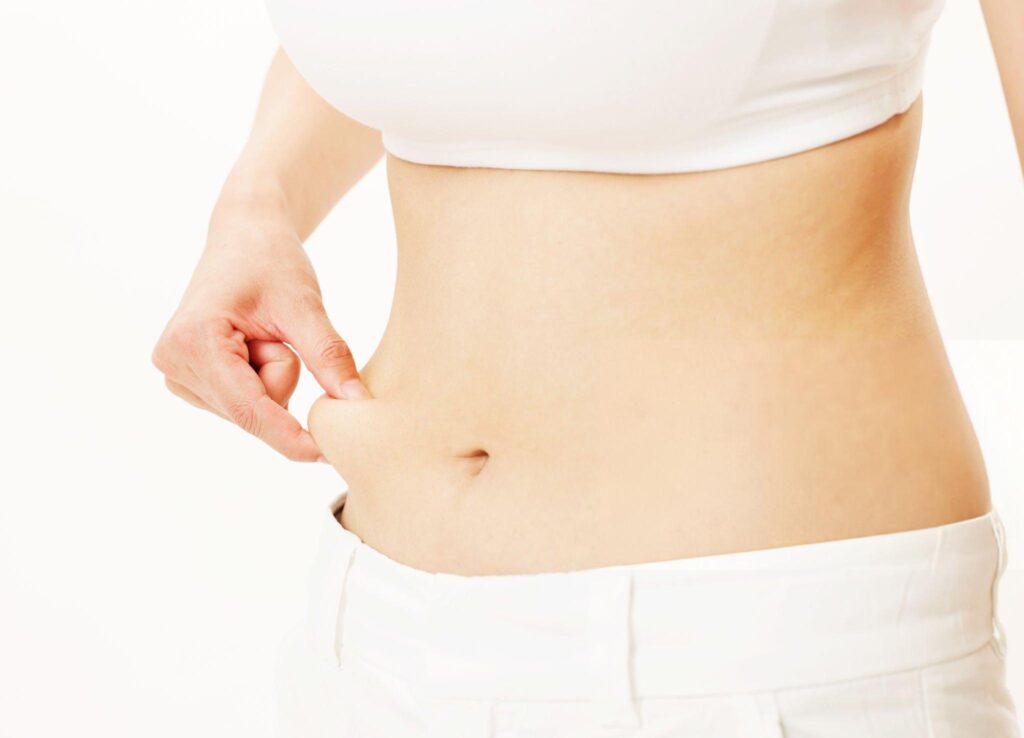
Non-surgical procedures may be considered for selected areas of subcutaneous abdominal fat when the aim is localised contouring rather than weight loss. The degree of change depends on the technology, the amount and type of tissue present, and individual suitability.
Some abdominal concerns involve loose skin, muscle separation or visceral fat rather than a localised fat deposit. These may require different advice or treatment, and cosmetic body contouring cannot address every cause of abdominal fullness.
If you have lost a significant amount of weight and are noticing changes in skin firmness, our guide to loose skin after weight loss explains why excess skin may remain and what non-surgical options can realistically offer.
Non-Surgical Fat Reduction vs Liposuction
Liposuction is a surgical procedure that removes selected fat deposits through a cannula inserted beneath the skin. Non-surgical body-contouring procedures use devices applied externally and do not remove fat through an incision.
Both approaches involve limitations and risks, and they are not interchangeable.
| Feature | Non-surgical body contouring | Liposuction |
|---|---|---|
| Procedure | External device treatment | Surgical fat removal |
| Incisions | Generally none | Required |
| Anaesthesia | Depends on the procedure; often not required | Depends on the surgical approach |
| Intended change | Selected localised contour concerns | Surgical removal of selected fat deposits |
| Recovery | Often less interruption, but side effects and recovery vary | Surgical recovery and postoperative care |
| Main limitations | Modest or variable changes; device-specific suitability | Surgery, anaesthesia and postoperative risks |
People searching for “non-surgical liposuction” are generally looking for an alternative to surgery. Non-surgical treatments are not forms of liposuction and cannot be expected to provide identical results.
What Types of Non-Invasive Fat Reduction Treatments Are Available?
Several technologies are used in non-surgical body contouring, but their mechanisms, evidence and intended outcomes differ.
Cryolipolysis (Fat Freezing)
Cryolipolysis uses controlled cooling to affect selected fat cells beneath the skin. It has been studied for localised fat reduction, with changes generally developing gradually. Possible risks include temporary swelling, pain, numbness and, less commonly, more serious complications.
Ultrasound-Based Treatments
Some devices use ultrasound energy for cosmetic body-contouring purposes. Their mechanisms and evidence depend on the technology and specific device, so results established for one system should not automatically be assumed to apply to another.
Radiofrequency and Thermal-Based Treatments
Certain radiofrequency-based devices are used for body contouring, skin firmness or the appearance of cellulite. Not every RF device is intended primarily for fat reduction.
Cryo T-Shock
Skinduced offers Cryo T-Shock as a temperature-based, non-surgical body-contouring service. It uses controlled cooling and warming cycles. The treatment should not automatically be described as equivalent to conventional cryolipolysis, and suitability and expected outcomes require individual assessment.
The most appropriate option depends on the actual device, the concern being addressed and the available clinical evidence—not simply whether a technology uses cooling, heating or another form of energy.
What Can Non-Surgical Body Contouring Realistically Achieve?
Non-surgical body contouring may help change the appearance of selected areas for suitable individuals, depending on the procedure used. Some treatments aim to reduce localised fat, while others focus on skin texture, firmness or muscle-related contours.
Potential advantages include avoiding surgical incisions and having a shorter recovery period than many surgical procedures. However, treatment may require multiple sessions, results can be modest or absent, and complications are possible.
These procedures do not replace exercise, healthy eating or medical weight management. They are also not interchangeable with treatment for cellulite, loose skin or significant excess abdominal fat.
Interested in Cryo T-Shock Body Contouring?
Learn how Cryo T-Shock uses controlled cooling and warming, which areas may be considered, and what to know about treatment suitability and potential risks.
Who May Be Suitable for Non-Surgical Fat Reduction?
Suitability depends more on individual anatomy, medical history, the proposed procedure and realistic expectations than on age or gender alone.
Non-surgical body contouring may be discussed with adults who have a particular localised concern and understand that the intended outcome is contouring, not substantial weight loss.
When Might Treatment Be Unsuitable?
Reasons to avoid or reconsider a procedure depend on the device. Pregnancy, certain medical conditions, conditions affecting circulation, altered sensation, implants or previous surgery in a treatment area may affect suitability.
For cold-based procedures, particular precautions may apply to people with cold-sensitivity disorders such as Raynaud’s disease, cold urticaria or cryoglobulinaemia. Some abdominal procedures may also be unsuitable near a hernia or weakened abdominal wall.
A practitioner should review the relevant contraindications, treatment-area characteristics and medical history before recommending any procedure.
How Cryo T-Shock Works
What Happens During a Session?
Cryo T-Shock uses temperature-controlled applicators as part of a non-surgical body-contouring service. The treatment begins with an assessment of the area and a review of relevant medical history.
If the procedure is appropriate, the practitioner explains the planned application, expected sensations, possible risks and aftercare requirements. Cooling and warming may be experienced during the session, and comfort varies between individuals.
Which Areas and How Many Sessions?
Skinduced’s Cryo T-Shock service includes options for selected body areas, including the abdomen and thighs, but an area’s availability does not establish suitability for an individual.
Treatment duration, number of sessions and spacing depend on the area, equipment and assessment. There is no universal session count that can guarantee a particular reduction in fat or improvement in contour.
What Results, Recovery and Risks Should You Expect?
When Might Changes Become Noticeable?
Changes following non-surgical body-contouring procedures develop at different rates. For conventional cryolipolysis, the body’s response to treated fat cells may continue over several months.
Timelines for Cryo T-Shock and other technologies should be based on evidence specific to the device and treatment protocol. It would be misleading to promise that every patient will see changes within two to four weeks or that the best results will always appear within six to twelve weeks.
What Side Effects and Risks Are Possible?
Temporary redness, swelling, tenderness, bruising, numbness or altered sensation may occur with some body-contouring procedures.
Depending on the technology, other complications can include burns, persistent sensory changes, skin irregularities or tissue injury. Conventional cryolipolysis also carries a risk of paradoxical adipose hyperplasia, in which the treated fatty tissue enlarges instead of shrinking.
These risks do not apply identically to every device. A practitioner should explain the risks relevant to the exact proposed procedure, recovery expectations and when to seek medical advice.
For a more detailed explanation of possible reactions and recovery, read our guide to fat freezing side effects, which discusses concerns associated with fat-freezing procedures.
How Do Non-Surgical Fat Reduction Options Compare?
Comparing body-contouring treatments requires more than looking at whether they involve cooling, heat or ultrasound. Evidence, treatment goals, risks and recovery differ between devices and procedures.
| Approach | Main mechanism | Important consideration |
|---|---|---|
| Cryolipolysis | Controlled cooling of selected subcutaneous fat | Gradual, variable contour changes; specific cold-related risks |
| Cryo T-Shock | Temperature-based cooling and warming | Device-specific evidence and indications need to be reviewed |
| Ultrasound-based contouring | Uses ultrasound energy | Effects vary considerably across different systems |
| Radiofrequency-based contouring | Uses controlled RF energy | Some systems focus on firmness or cellulite rather than fat reduction |
| Liposuction | Surgical removal of selected fat deposits | Different degrees of invasiveness, risks and recovery |
No single approach is appropriate for every patient or every concern. Comparing prices, pain levels, downtime or expected results is meaningful only when the specific procedures and available evidence are considered.
How Much Does Non-Surgical Fat Reduction Cost?
The cost of non-surgical body contouring depends on the procedure, treatment area, number of sessions and what is included in the plan.
Skinduced publishes indicative pricing on its individual treatment pages, including Cryo T-Shock. Costs should be confirmed before booking, alongside suitability, possible additional sessions and the limitations of the proposed treatment.
A lower cost per session does not necessarily mean a treatment is more effective or better value for a particular concern.
Considering Non-Surgical Body Contouring in Newcastle?
If you are considering body contouring, a consultation can help clarify whether the concern involves localised subcutaneous fat, loose skin or another factor. It is also an opportunity to discuss available technologies, treatment suitability, costs, possible risks and alternatives, including having no cosmetic procedure.
Skinduced Aesthetics Clinic is located in Cameron Park, Newcastle. You can explore the clinic’s body treatment options or enquire about a consultation before deciding whether to proceed.
Considering Body Contouring?
Learn about Skinduced’s non-surgical body treatments and discuss suitability, realistic expectations and potential risks with our team.
FAQs:
Does non-surgical fat reduction actually work?
Non-surgical body-contouring procedures can produce changes in selected areas for some people, but effectiveness depends on the technology and the concern being treated. Conventional cryolipolysis has clinical evidence for localised fat reduction; that evidence should not automatically be applied to every cooling or thermal-based device. Results vary and may be modest or absent.
Can you remove belly fat without surgery?
Some non-surgical procedures are intended to address selected areas of subcutaneous fat beneath the skin. They do not reduce visceral fat around the internal organs and are not substitutes for overall weight management. The appropriate approach depends on the type of abdominal fat and other factors such as skin laxity or abdominal-wall changes.
Can non-invasive treatment reduce thigh fat?
Some body-contouring technologies may be considered for localised fat in the inner or outer thighs. Suitability depends on the amount and distribution of fat, skin quality, the device and medical history. An assessment is needed before discussing possible outcomes.
Is non-surgical liposuction the same as fat freezing?
No. Liposuction is a surgical fat-removal procedure. Fat freezing, or cryolipolysis, is a non-surgical technology that uses controlled cooling to affect selected subcutaneous fat cells. The procedures differ in mechanism, treatment experience, recovery and possible results.
Can non-surgical fat reduction permanently remove fat?
Some technologies, such as cryolipolysis, are intended to reduce fat cells within a treated area. However, the overall appearance can still change with weight fluctuations, and outcomes are not guaranteed. Claims of permanent fat removal should be supported by evidence specific to the treatment and device.
Is non-surgical fat reduction safe?
Every body-contouring procedure carries potential risks. These vary by technology and may include temporary swelling, tenderness, bruising or altered sensation, while more serious complications are possible with certain procedures. A practitioner should explain relevant risks, contraindications and recovery before treatment.
Does non-surgical fat reduction help with cellulite or loose skin?
Not necessarily. Localised fat, cellulite and skin laxity are different concerns. Some technologies are designed for fat reduction, while others aim to improve skin texture or firmness. A treatment suitable for one concern may not address the others.
How many sessions are needed, and when will results appear?
The number of sessions and timeframe vary depending on the treatment, area and individual response. Conventional cryolipolysis can produce gradual changes over several months, but this timeline should not automatically be applied to Cryo T-Shock or other systems. No fixed course guarantees a particular result.
How much does non-surgical fat reduction cost in Newcastle?
Costs depend on the technology, treatment area, session number and individual plan. Skinduced provides indicative prices on its treatment pages. A consultation can clarify the expected cost, what is included and whether the proposed procedure is appropriate.
