
Dermamelan vs Cosmelan: Which Pigmentation Treatment Is Right for You?
Dermamelan and Cosmelan are both professional depigmentation systems commonly compared for concerns such as melasma, sunspots, dark patches, and uneven skin tone. They share a similar treatment approach, but they are not identical.
The right option is not chosen by brand name alone. Pigmentation type, depth, skin sensitivity, Fitzpatrick skin type, medical history, and aftercare commitment all influence which treatment may be discussed during a consultation.
Skinduced Aesthetic Clinic offers Cosmelan and pigmentation-focused skin treatments. Dermamelan is discussed in this article as a related depigmentation option, but availability should be confirmed directly with the clinic. A consultation can help assess your pigmentation type and suitable treatment options.
What Is the Difference Between Dermamelan and Cosmelan?
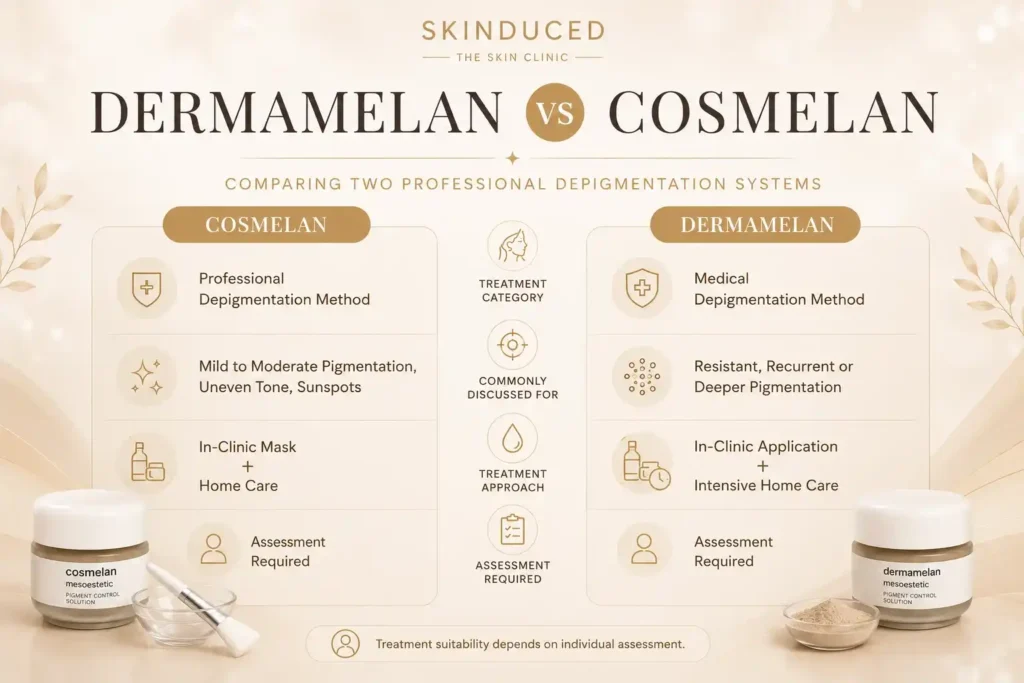
Cosmelan is generally discussed for mild to moderate pigmentation and uneven tone. Dermamelan is commonly positioned as the more intensive depigmentation method for resistant or deeper pigmentation concerns.
Both involve an in-clinic application phase followed by a structured home-care phase. Both require careful aftercare and consistent sun protection. Neither should be treated as a guaranteed cure for melasma or pigmentation.
Pigmentation can return, especially melasma. Treatment choice should reflect your skin profile and ability to follow aftercare, not simply which option sounds stronger.
Dermamelan vs Cosmelan Comparison Table
| Feature | Cosmelan | Dermamelan |
| Treatment category | Professional depigmentation method | Medical depigmentation method |
| Commonly discussed for | Mild to moderate pigmentation, uneven tone, sunspots | Resistant, recurrent, or deeper pigmentation concerns |
| Skin concerns | Melasma, sunspots, freckles, PIH, uneven tone | Stubborn melasma, deeper pigmentation, recurrent PIH |
| Treatment style | In-clinic mask plus home care | In-clinic application plus more intensive home care |
| Downtime | Redness, tightness, peeling may occur | May involve more intense redness, peeling, sensitivity |
| Home-care importance | High | Very high |
| Suitability | Assessment required | Assessment required |
Both options require consistent aftercare, daily sun protection, and realistic expectations because pigmentation can return.
What Is Cosmelan?
Cosmelan is a professional depigmentation method that targets pigmentation of melanin origin. It works by addressing tyrosinase activity, the enzyme involved in melanin production, to help regulate excess pigment and support controlled surface renewal.
It is commonly discussed for melasma, sunspots, freckles, post-inflammatory hyperpigmentation, and uneven skin tone. The treatment includes a professional in-clinic phase and a home-care maintenance phase.
At Skinduced, Cosmelan is available for pigmentation concerns and can be discussed during a consultation based on individual suitability and skin assessment findings.
What Is Dermamelan?
Dermamelan is a medical depigmentation method from the same treatment category. It is commonly discussed for more resistant or deeper pigmentation concerns, including persistent melasma that has not responded well to other approaches.
The home-care phase with Dermamelan may be stricter or more intensive than Cosmelan. This is one reason why clinician assessment matters before choosing either system.
Dermamelan is included in this article for comparison because many people research it alongside Cosmelan. Treatment availability should always be confirmed directly with the clinic before booking.
How Do These Treatments Work on Pigmentation?
Pigmentation forms through melanogenesis, the process where melanocytes produce melanin. Tyrosinase is one of the key enzymes involved in this process.
Cosmelan and Dermamelan aim to regulate excess melanin production and support controlled surface renewal. The in-clinic phase starts the process, while the home-care phase helps maintain pigment control.
Aftercare matters because pigmentation can return, especially with melasma, UV exposure, heat, or inconsistent sun protection. Epidermal pigmentation is usually more surface-level, while dermal pigmentation can be deeper and more complex to manage.
Which Treatment May Suit Different Pigmentation Types?
Melasma and Hormonal Pigmentation
Melasma can be persistent and triggered by hormones, heat, UV, and genetics. Treatment choice depends on pigment depth, skin type, and recurrence risk. Both options require strong sun protection and ongoing maintenance. In Newcastle, Lake Macquarie and the Hunter Region, regular UV exposure can make pigmentation more noticeable. It may contribute to recurrence if sun protection and aftercare are not consistent, making aftercare planning particularly important.
Sunspots, Freckles and Uneven Tone
Cosmelan may be discussed for milder to moderate pigmentation concerns, such as sunspots and uneven tone. Dermamelan may be discussed when pigmentation is more resistant or recurrent. Assessment confirms whether the pigment is melanin-based and suitable for depigmentation treatment. For some concerns, laser-based pigmentation treatments may also be worth discussing during consultation.
Post-Inflammatory Hyperpigmentation
PIH can follow acne, irritation, burns, or skin trauma. Darker skin types may have a higher risk of PIH. Treatment should be planned carefully to avoid triggering further pigmentation through inflammation.
Is Dermamelan Better Than Cosmelan?
Not automatically. Dermamelan may be considered more intensive, but a stronger option is not always the better option.
Cosmelan may be more appropriate for some pigmentation types and skin profiles. Suitability depends on pigmentation depth, skin sensitivity, Fitzpatrick skin type, medical history, downtime tolerance, and home-care commitment.
The better option is the one that matches your skin, pigmentation type, and ability to follow aftercare, not simply the stronger-sounding treatment.
Treatment Process and Downtime
Both treatments usually begin with an in-clinic application. The mask is removed after a set time, based on clinician instructions, and the home-care phase continues for several months.
During the early phase, you may notice redness, tightness, sensitivity, peeling, flaking, or mild swelling. Some people call this the “ugly phase”, but intensity varies by protocol, skin type, and individual response.
Visible reactions may last around 7 to 14 days, while pigment changes develop gradually over the following weeks and months. Less common risks can include prolonged redness, irritation, post-inflammatory hyperpigmentation, infection, scarring, or worsening pigmentation if treatment or aftercare is not suitable.
Can You Do Dermamelan or Cosmelan at Home?
The full treatment should not be self-started at home. These systems include professional assessment, in-clinic application, and clinician-guided aftercare.
Home-care products are part of the protocol after the professional phase. Incorrect use without assessment can irritate skin or worsen pigmentation.
Home care is part of the process, but it is not the same as doing the treatment yourself.
Are These Treatments Suitable for Darker Skin Tones?
Darker Fitzpatrick skin types can sometimes be more reactive to inflammation, so treatment selection and aftercare need careful planning. Aggressive protocols without proper assessment can trigger post-inflammatory hyperpigmentation rather than resolve it.
Suitability depends on skin type, pigment depth, barrier condition, and clinician assessment. Sun protection and gentle aftercare become even more important for managing pigmentation in higher Fitzpatrick types.
Cost, Sustainability and Maintenance
Cost depends on the clinic, protocol, products, review appointments, and home-care duration. A cheaper option is not always more sustainable if maintenance is poor.
Long-term pigmentation control usually requires daily SPF, home-care products, and trigger management. Pigmentation can return, especially melasma. Treatment cost should be considered alongside the required home-care phase and long-term maintenance commitment.
When Should You Avoid or Delay Treatment?
Treatment may need to be postponed if:
- You are pregnant or breastfeeding, unless your clinician advises otherwise
- There is active infection, irritation, or broken skin
- You have a recent sunburn or tanning
- Strong actives or other procedures were used recently
- You cannot commit to the aftercare protocol
If a spot is changing in size, shape, colour, bleeding, or not healing, it should be checked by a doctor before cosmetic pigmentation treatment is considered.
Cosmelan and Pigmentation Treatment at Skinduced
Skinduced Aesthetic Clinic offers Cosmelan and pigmentation-focused skin treatments at Cameron Park, serving patients across Newcastle, Lake Macquarie, and the wider Hunter Region.
A skin assessment helps identify pigment type, depth, triggers, skin sensitivity, and suitable options. Whether Cosmelan, professional peels, or another approach is most appropriate depends on your individual assessment.
If you are comparing Dermamelan and Cosmelan, book a pigmentation consultation at Skinduced. The team can assess your skin and discuss Cosmelan or other suitable pigmentation-focused options based on your individual needs.
FAQs
What’s better, Cosmelan or Dermamelan?
Neither is better for everyone. Dermamelan is often discussed as the more intensive option, while Cosmelan may suit some mild to moderate pigmentation concerns. Assessment is needed before choosing.
Is Dermamelan worth it?
It may be worth discussing if pigmentation is persistent, recurrent, or melasma-related. Suitability, downtime, cost, and home-care commitment should be considered first.
What is stronger than Cosmelan?
Dermamelan is commonly positioned as the more intensive system in the same depigmentation category. Stronger does not always mean more suitable.
How long does a Dermamelan peel last?
The full process can involve several months of home care and maintenance. Pigmentation control depends on triggers, sun protection, and continued care.
Does Dermamelan work on melasma?
Dermamelan is commonly discussed for resistant melasma, but melasma can be recurrent and difficult to control. Results vary, and ongoing sun protection is essential.
What worsens pigmentation?
UV exposure, heat, hormonal changes, inflammation, acne irritation, harsh skincare, and poor sun protection can worsen pigmentation.
What is the difference between melasma and hyperpigmentation?
Hyperpigmentation is a broad term for excess pigment. Melasma is a specific type often linked with hormones, heat, UV exposure, and recurrence.
Unsure whether Cosmelan, Dermamelan, or another pigmentation treatment is right for your skin? Book a consultation at Skinduced Aesthetic Clinic in Cameron Park. Treatment recommendations are made after assessment, and results vary between individuals.
